

Braising or Stewing Your Meat is Sexy
Braising or Stewing Your Meat is Sexy
-
-
-
-
-
Braising or Stewing Your Meat is Sexy
-
Post #1 - January 3rd, 2011, 4:52 pmWe've got long and active threads about smoking meat, curing meat, and grilling meat, and probably doing other things with meat that I haven't mentioned. Those are certainly fine things to do, but what about that tried and true method passed from generation to generation even in families of humble culinary ability: stew. My mother made stew. Your mother made stew. Her mother made stew too. It's time we honored our mothers with a thread dedicated to this humble but delicious way of cooking meat, and I suggest that we do so by posting our favorite recipes here. With pictures, of course - because if stewing your meat isn't really sexy, pictures of your meat most certainly are.
You can stew poultry or pig or game, but to me when it comes to stew, cow is choice number one. There's nothing like transforming a humble piece of tough, tissue-ey cut into tender, luscious beefiness and taking in the wonderful aromas as the transformation happens. I'm particular about my beef in that I don’t like a lot of "stuff" with it. You can keep your trendy overtopped hamburgers and your roulades with 7 layers of vegetables distracting me from my meat. Lettuce and tomatoes don't belong anywhere near my burgers and - similarly - vegetables are not allowed in my stew. Celery, carrots, turnips? Those are side dishes. My beef stew is a BEEF stew. Modeled after a classic Provencal daube, I use just a few things to complement the flavor of the meat, and that's it.
Chuck, marinating:
I buy a cheap chuck steak and hack it into even pieces, then marinate the pieces in red wine and garlic for about 3 hours. Some daube recipes say to do this overnight oor longer, but I think they're wrong. By that point the meat denatures enough and takes on enough wine flavor that I almost don't recognize it as cow. I like cow. A lot.
Other ingredients:
That's anchovy, olives, orange peel, garlic and thyme. All flavors that bring out the meat's natural flavors. No carrots. No celery. And no - God forbid - potatoes. I don’t know when potatoes became such a common part of stews. You can serve me stew over some mashed or boiled potatoes, but you cannot put potatoes in my stew.
Fond after giving the chuck some serious browning:
If you're like me, it doesn't take too much for your meat to be ready for action, but you can't just throw it in there and expect it to excite anyone. No, you have to do this simple step first. I brown my meat hard after seasoning it, creating a flavorful crust and a nice fond in the pot. Then garlic and anchovy goes into that fond and it's deglazed with the red wine marinade, which is the only liquid I use in my daube.
Let it go:
Once the pan is deglazed, I put the meat back in along with everything else, cover it, and let it lovingly go in a 275 degree oven for 3-4 hours. I take off the lid only once to make sure the house fills with that intoxicating aroma and the neighbors get jealous. Once it's done, I remove the meat and keep it warm while I reduce the liquid. This thickens it a bit, but the main reason I do it is for flavor. I want intense, beefy wine sauce. Note that for this reason it's important not to oversalt your braising liquid - if it tastes right when you start the stew, it's going to be unpalatably salty once you reduce the liquid.
Serve:
over egg noodles with a fork, a spoon, and a good, crust baguette....defended from strong temptations to social ambition by a still stronger taste for tripe and onions." Screwtape in The Screwtape Letters by CS Lewis
Fuckerberg on Food
-
-
-
Post #2 - January 3rd, 2011, 5:05 pmBeautiful stuff, Kenny. Great thread.-Mary
-
-
-
Post #3 - January 3rd, 2011, 9:23 pmThe daubes I had in Nice in December were all pretty free of any vegetable other than bits of mirepoix, and served over pasta.
The use of pasta appeared to either be indiscriminate, or else house specialty: I saw fettucine, rotini, gnocchi and ravioli.What is patriotism, but the love of good things we ate in our childhood?
-- Lin Yutang
-
-
Post #4 - January 3rd, 2011, 9:33 pmBraising is one of my favorite cooking techniques. Even on a tiny budget you can have wonderful, tender, flavorful meat. My last braise was short ribs cooked with cold brewed coffee, dried chiles, cumin, and onion; served over some soft creamy polenta.
-
-
Post #5 - January 3rd, 2011, 9:36 pmGreat idea for a thread! This is definitely the time of year for braising and stewing, I should have something to add to the thread in the next couple of days.It is VERY important to be smart when you're doing something stupid
- Chris
http://stavewoodworking.com
-
-
Post #6 - January 6th, 2011, 5:33 pmI've made beef stew with latkes in the past, but I use veg including KZ kryptonite, potato. But if KennyZ says no veg Beef Stew is Sexy, I have to give it a go.
Ducks in a Row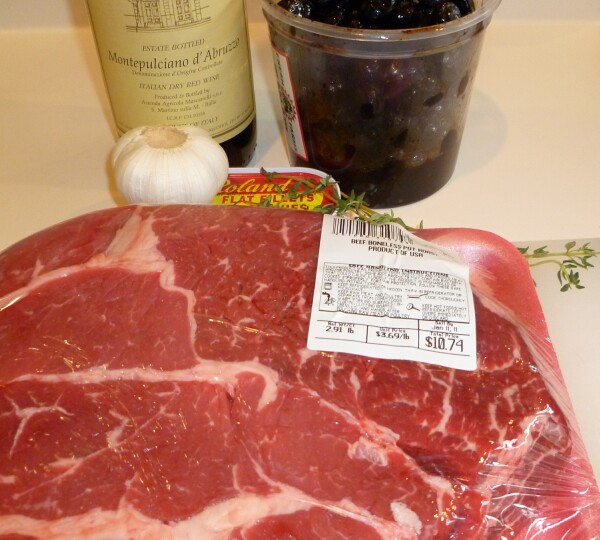


Into the fridge for 3-4 hour marinade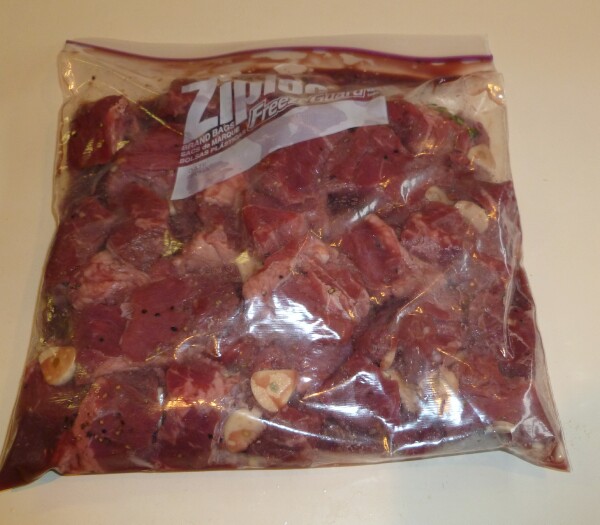
Don't crowd the pan, three rounds for pictured amount of meat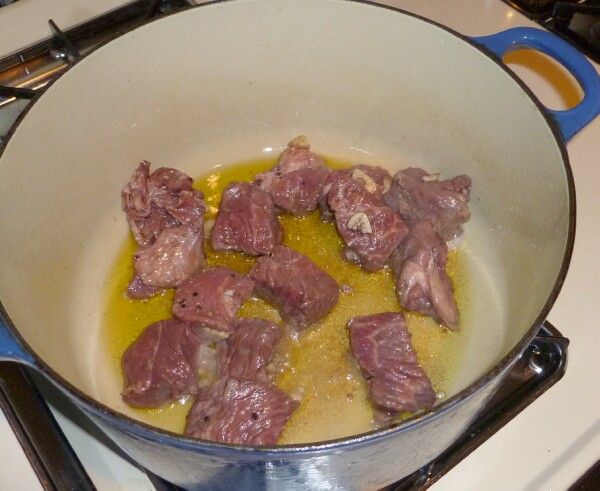
After a good hard sear add anchovy/garlic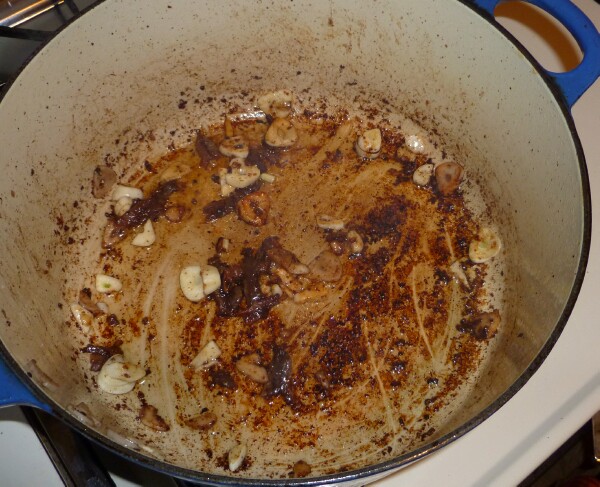
As per KennyZ, add marinade, deglaze, seared meat and rest of ingredients.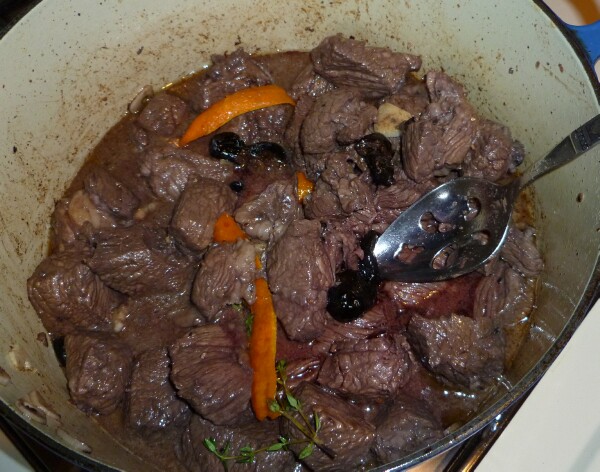
Into the oven at 275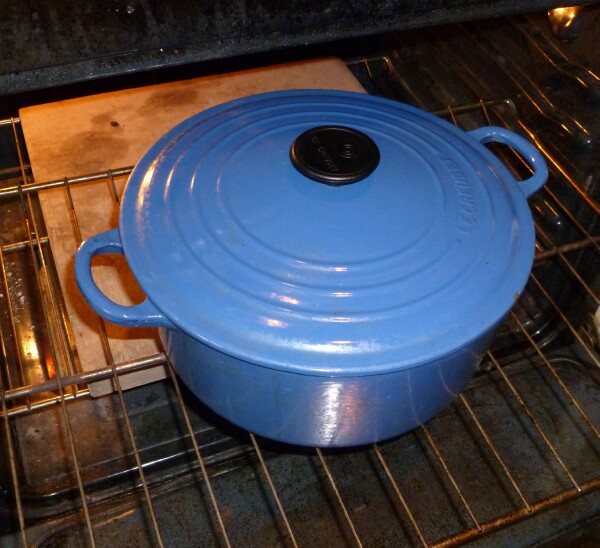
I will let you know how it turns out in 3-4 hours.
Enjoy,
Gary
-
-
Post #7 - January 6th, 2011, 7:00 pmNow make it in a cheap stainless steel pot and let us know if there's any difference.
 i used to milk cows
-
-
Post #8 - January 6th, 2011, 7:55 pmI'd actually be kind of interested to try that if we used a good SS pot.
-
-
Post #9 - January 6th, 2011, 8:22 pmI polished off last of my leftovers yesterday, or we'd have that cheap stainless steel sample to try next to Gary's. Cookware aside, cool that Mr. Wiv made the recipe to what looks like a tee (except the blasphemous Italian wine with a French dish). Don't neglect to eat the orange peel, which is not merely a sauce-flavoring agent. The bitterness mellows after all that cooking and is a pleasant counter to the brininess of the olives....defended from strong temptations to social ambition by a still stronger taste for tripe and onions." Screwtape in The Screwtape Letters by CS Lewis
Fuckerberg on Food
-
-
Post #10 - January 6th, 2011, 9:32 pmHey, it's a trend.
I bought 2.5 lbs of (real) bone-in short-ribs. I used a link I think I found here, but can't find any longer, but then I messed with it.
Dusted with 1.5 tsp salt, 1Tbs pepper, 1 Tbs cumin (went low on salt because of ingredients added later), 1Tbs garlic powder.
Browned on all sides in a Calphalon enameled dutch oven (notes on that below)
Add: 3 carrots, rough chopped, 1 onion, 1 can italian tomatoes (recipe called for celery and tomato paste, neither of which I had on hand)
Add: 2C red wine, 1C chicken broth (recipe called for the other way around, and beef, not chicken broth)
Add: 3 anchovies, 1/3C nicoise olives, chopped
Add: 1 bay leaf 2 Tbs dried celery leaves (because I didn't have the celery, but I had the dried leaves from my winter CSA last year)
Put in 350 oven for three hours.
Added another cup of water after two hours -- it was releasing a lot more steam than I'd expect a dutch oven to do, but man, the house smelled good.
Take it out, allow to cool, remove bones and meat, strain liquid from veggies and cool in freezer to remove fat.
Add veggies, meat and liquid back in, along with a little more water, keep on x-lo setting on stove until dinner time.
Served with roasted potato wedges and sauteed asparagus with a squeeze of lemon.
[Edit - I left out the garlic powder before]Last edited by JoelF on January 7th, 2011, 8:59 am, edited 1 time in total.What is patriotism, but the love of good things we ate in our childhood?
-- Lin Yutang
-
-
-
Post #11 - January 7th, 2011, 8:28 amteatpuller wrote:Now make it in a cheap stainless steel pot and let us know if there's any difference.
I don't think you'd notice that big of a difference. You would notice a difference if you cooked these on these on the stove because the heat retention and distribution properties of the vessel would become important. But the very good reason to use the oven is because of its even, steady heat. The main difference that the material and thickness of the pot makes in an oven is in transferring the ambient heat to the food. The differences between a clad stainless steel pot and a cast iron pot are not so big that it will have a big effect on meat during a long, slow braise. I'm not saying there would be no difference. I'm saying the difference would be very small and easily corrected-for by altering the cooking time/temp as necessary.
The folks at eGullet did a nice series on braising in which they tested the effects of various factors on the final product. The full series starts at http://forums.egullet.org/index.php?/to ... -braising/
The first experiment compares a cast iron dutch oven, a thin calphalon dutch oven, corning ware, and a disposable aluminum pan.
http://forums.egullet.org/index.php?/to ... -braising/
Everyone seemed to agree that the only material that seemed different from the others was the disposable aluminum pan.
-
-
-
Post #12 - January 7th, 2011, 9:05 amA note on vessels used: In making three briskets for rosh hashanah on a previous year, I found that a key factor was sealability.
I have nice, deep large rectangular ceramic casserole, but there's no lip to the edge. Getting a foil seal on that was harder than on the cheap aluminum roasting pan I used for #3, and it dried out.
Similarly, the Calphalon dutch oven I used on Wednesday doesn't seem to seal well, and while it perfumed the house in ways most of us only dream of, again, it lost a lot of liquid. Next time, I'll put some foil between the bowl and lid.What is patriotism, but the love of good things we ate in our childhood?
-- Lin Yutang
-
-
Post #13 - January 7th, 2011, 9:09 amJoelF wrote:A note on vessels used: In making three briskets for rosh hashanah on a previous year, I found that a key factor was sealability.
I have nice, deep large rectangular ceramic casserole, but there's no lip to the edge. Getting a foil seal on that was harder than on the cheap aluminum roasting pan I used for #3, and it dried out.
Similarly, the Calphalon dutch oven I used on Wednesday doesn't seem to seal well, and while it perfumed the house in ways most of us only dream of, again, it lost a lot of liquid. Next time, I'll put some foil between the bowl and lid.
I always lay a sheet of foil directly on top of the braising ingredients before putting the lid on the pot. Seems to do the trick with minimal steam escape. The very low oven helps too - at the 350 you cooked at, steam escape is more of a problem than at 275....defended from strong temptations to social ambition by a still stronger taste for tripe and onions." Screwtape in The Screwtape Letters by CS Lewis
Fuckerberg on Food
-
-
-
Post #14 - January 7th, 2011, 9:32 amThe standard advice is to minimize open space in the cooking vessel. Kenny's idea to put foil just on top of the food is a good way to do this. Alton Brown recommended doing the entire braise in a tightly sealed aluminum foil pouch (i.e. no pot at all).
Tom Colicchio, in his books, recommends a slightly different method: he uses more liquid, so the meat is almost covered, and leaves the lid part-way open during the cooking. This method results in more browning than the traditional method.
I've braised with both methods, though not in any type of controlled experiment, and had good results.
-
-
-
Post #15 - January 7th, 2011, 10:00 amKennyz wrote:JoelF wrote:A note on vessels used: In making three briskets for rosh hashanah on a previous year, I found that a key factor was sealability.
I have nice, deep large rectangular ceramic casserole, but there's no lip to the edge. Getting a foil seal on that was harder than on the cheap aluminum roasting pan I used for #3, and it dried out.
Similarly, the Calphalon dutch oven I used on Wednesday doesn't seem to seal well, and while it perfumed the house in ways most of us only dream of, again, it lost a lot of liquid. Next time, I'll put some foil between the bowl and lid.
I always lay a sheet of foil directly on top of the braising ingredients before putting the lid on the pot. Seems to do the trick with minimal steam escape. The very low oven helps too - at the 350 you cooked at, steam escape is more of a problem than at 275.
I usually cover the top of my LC dutch oven with foil before putting the cover on and find that 300 for oven temp works well for braising. You get the fabulous aromas but don't boil out all your liquid. Next time I'll try Kenny's method--which by the way is Julia Child's method too.
-
-
-
Post #16 - January 7th, 2011, 10:02 amDarren72 wrote:I've braised with both methods, though not in any type of controlled experiment, and had good results.
Me to. I think it boils down (see what I did there?) to the recipe and what you want the end result to be. With some recipes I want the meat to be browned and the liquid reduced and in others, I don't.Steve Z.
“Only the pure in heart can make a good soup.”
― Ludwig van Beethoven
-
-
-
Post #17 - January 7th, 2011, 8:51 pm
KennyZ's Sexy Stew turned out very well except for slight operator error. I let it go 4-hours, which was slightly too long and the tip top of the beef, where it was not covered by braising liquid, dried out. I say operator error as I did not place a piece of foil or parchment on top of the meat to cut down air space and trap moisture. This is not my general practice, but I typically use more liquid for stew so dead space is not a factor.G Wiv wrote:I will let you know how it turns out in 3-4 hours.
As per KZ I reduced remaining braising liquid, beefy, flavorful with a lovely note of orange. As the liquid reduced a slight bitterness reveled, which I attribute to olives, half a teaspoon of honey evened flavor with no discernible sweetness. If there had been a carrot in the mix I am guessing the natural sweetness would have obviated the need for even a scant amount of honey
Reducing
Not a terrific picture, but a very tasty meal. Thanks for the inspiration KennyZ.
Beef Stew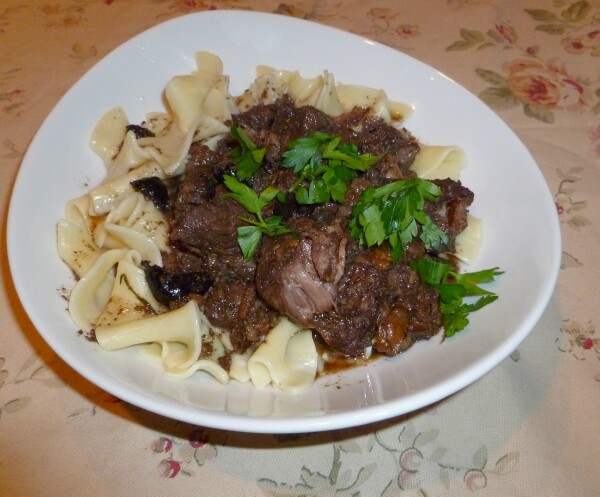
Enjoy,
Gary
-
-
Post #18 - January 7th, 2011, 8:57 pmTaking on braised oxtails this weekend. I'm looking forward to posting the play by play here and eating the results.
-
-
Post #19 - January 9th, 2011, 2:20 pmI braised some mutton and beef this week - both turned out great. Early in the week I cut a section of mutton leg into small chunks and made a lamb-pot pie out of it.
I browned the mutton chunks, then cooked shallots and garlic a bit in the pan and returned the mutton to the pan. I then added smoked turkey stock and white wine to cover, and tossed in some thyme, bay leaves, peppercorns, and rosemary. After braising for 2.5 hours at 325 degrees:
After that I strained and de-greased the cooking liquid and reduced it a bit. I added that to a little béchamel sauce. I had some leftover carrots and roasted potatoes from that night's dinner, and i diced those up and added those (with the mutton) to the sauce. I divided that up among some large ramikins:
I left that overnight. The next day I just covered them in puff pastry and baked long enough to reheat and cook the pastry:
I do the same general thing with chicken too, it's a good meal to make the night before, most nights I don't have enough time after I get home from work to braise for the proper length of time.It is VERY important to be smart when you're doing something stupid
- Chris
http://stavewoodworking.com
-
-
Post #20 - January 9th, 2011, 9:06 pmRed Wine Braised Oxtails
2 bottles of red wine reducing down to one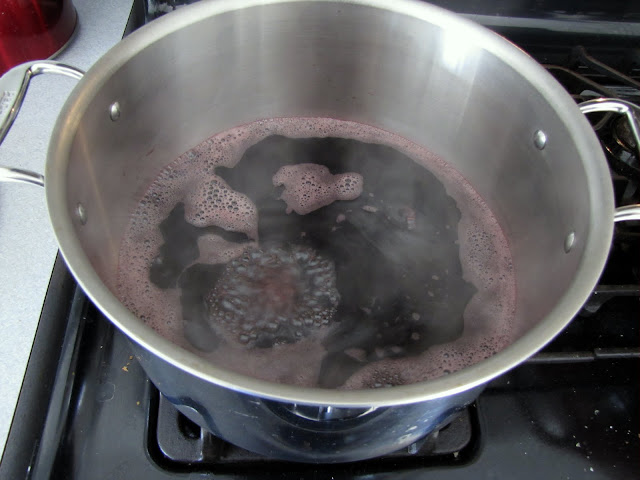
Veggies prepped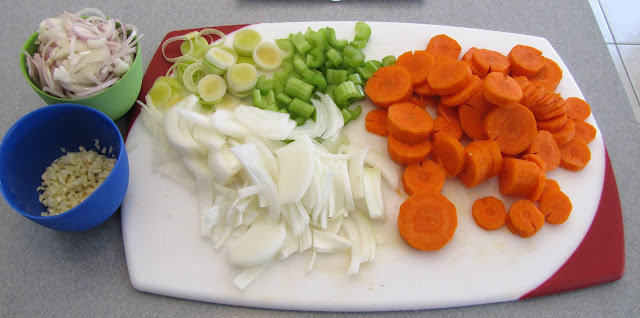
Oxtails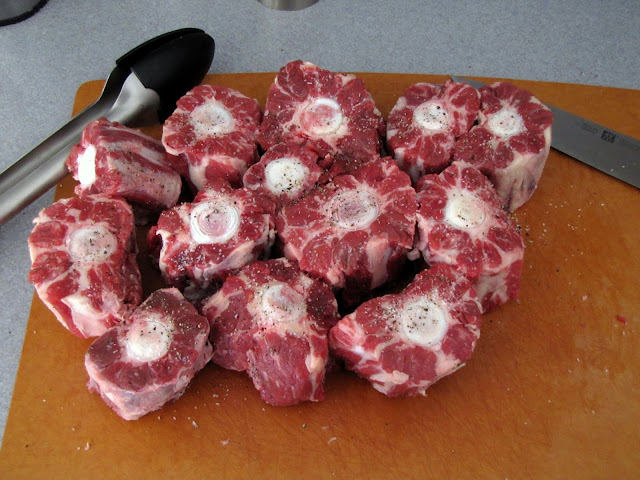
Everything in the pot ready to braise for 4 hours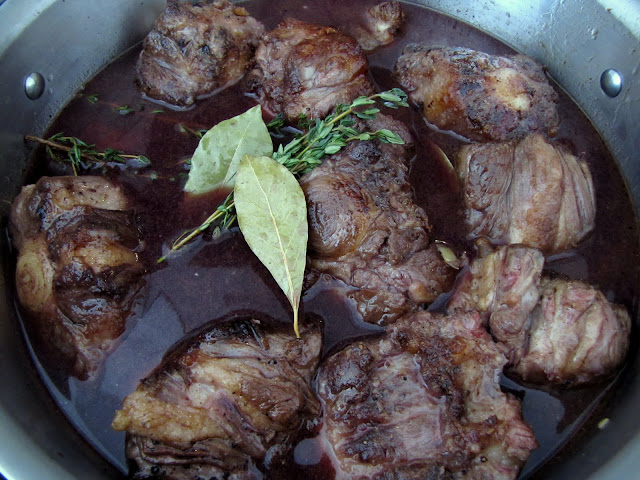
Liquid reducing for the sauce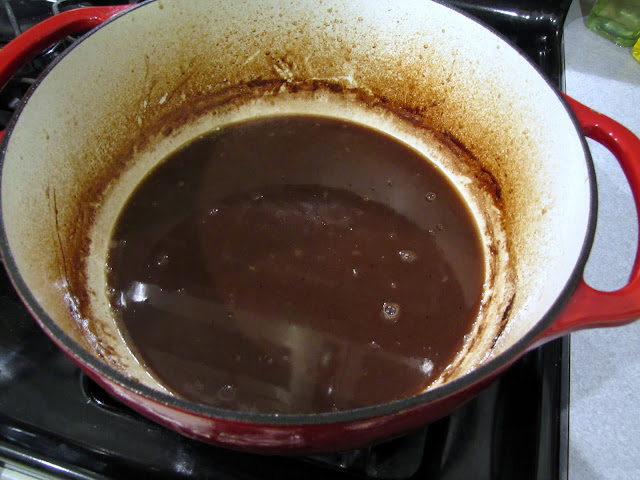
Final Product with Farfalle
-
-
Post #21 - January 10th, 2011, 8:14 amAttrill wrote:I braised some mutton and beef this week - both turned out great.
Where'd you get the mutton?i used to milk cows
-
-
Post #22 - January 10th, 2011, 10:26 amteatpuller wrote:Attrill wrote:I braised some mutton and beef this week - both turned out great.
Where'd you get the mutton?
Mint Creek Farm. I emailed them to order it, and then picked it up from them at the Logan Square farmers market.It is VERY important to be smart when you're doing something stupid
- Chris
http://stavewoodworking.com
-
-
-
Post #23 - January 10th, 2011, 9:27 pmVenison osso buco, wilted tatsoi, duck fat tater tots, for a tasting today:
Browning the floured venison shank in duck fat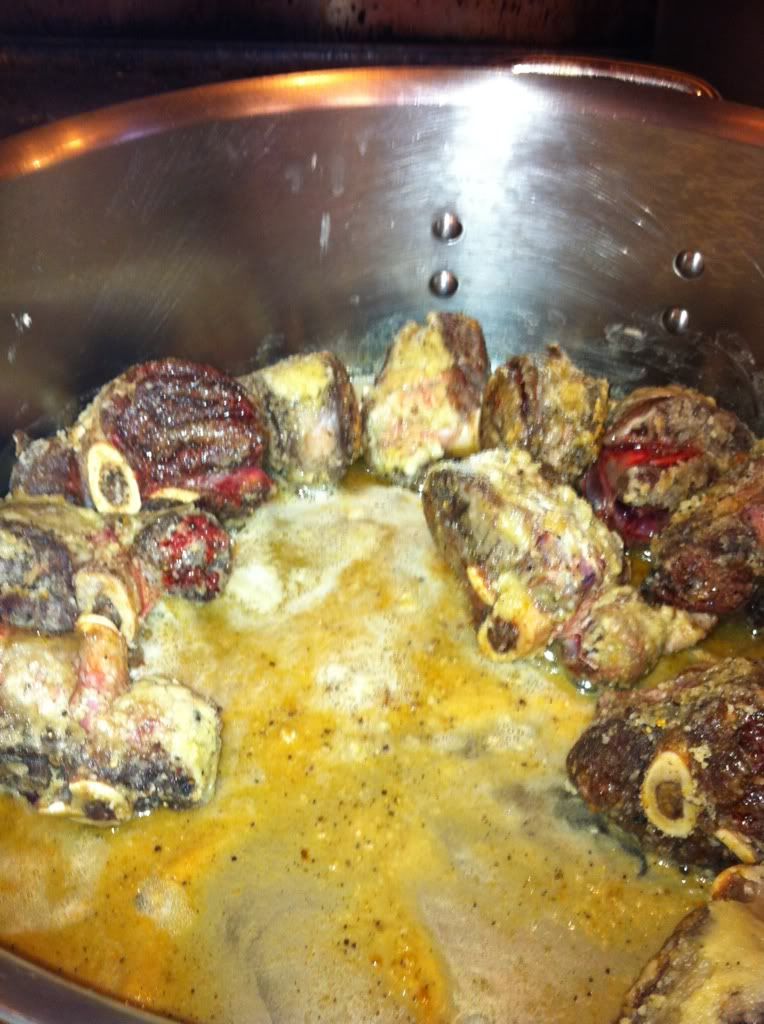
Mirepoix and spices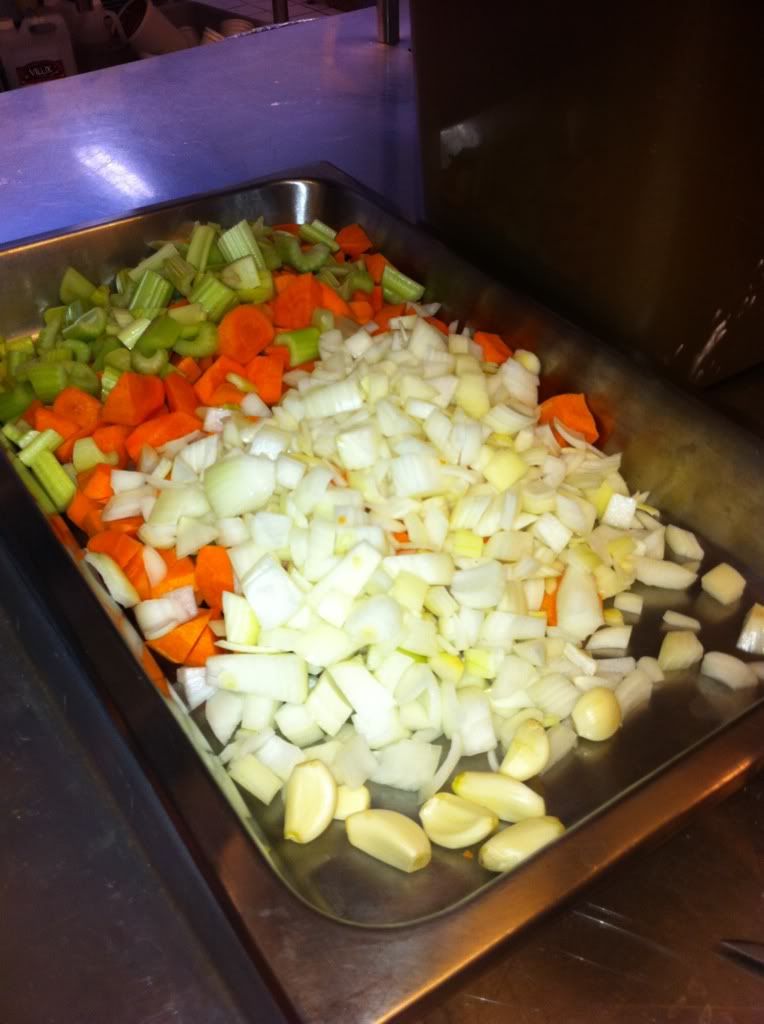
Fresh laurel leaves, oregano, thyme, cinnamon stick, allspice, clove, star anise and blood orange peel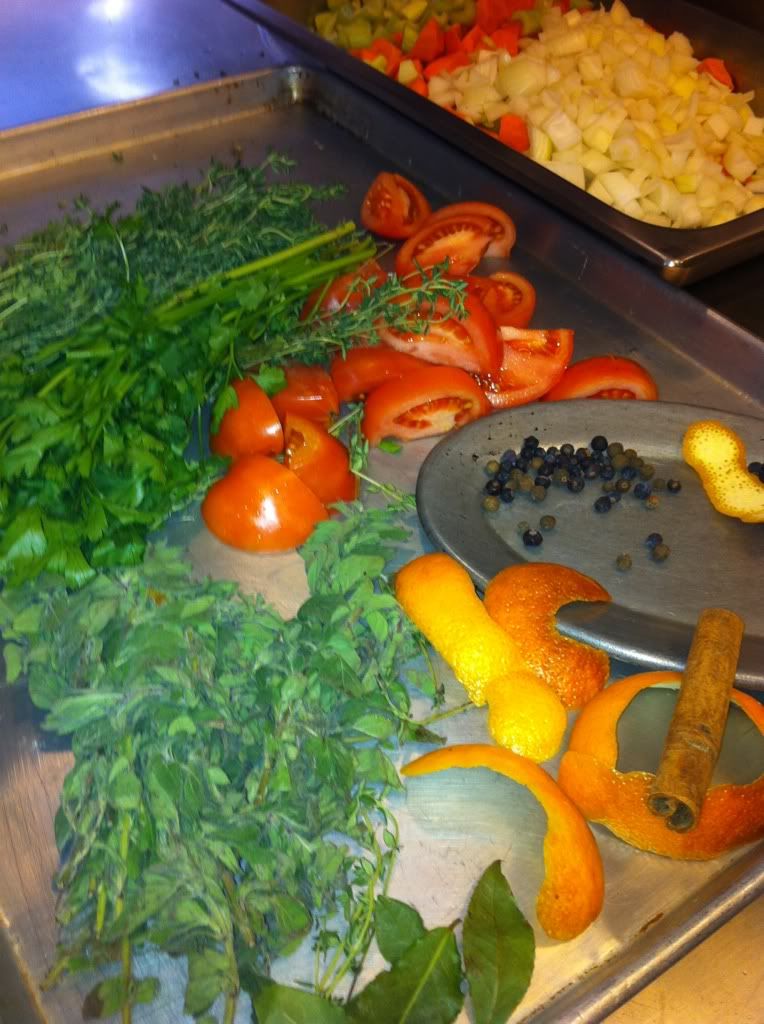
Sweating mirepoix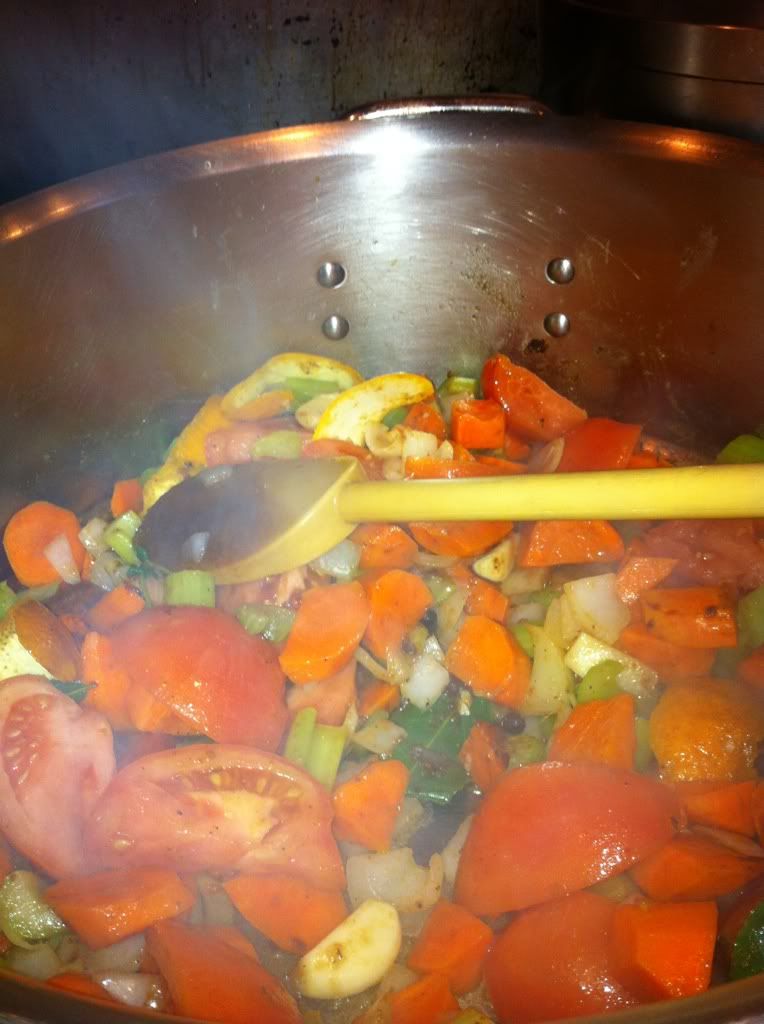
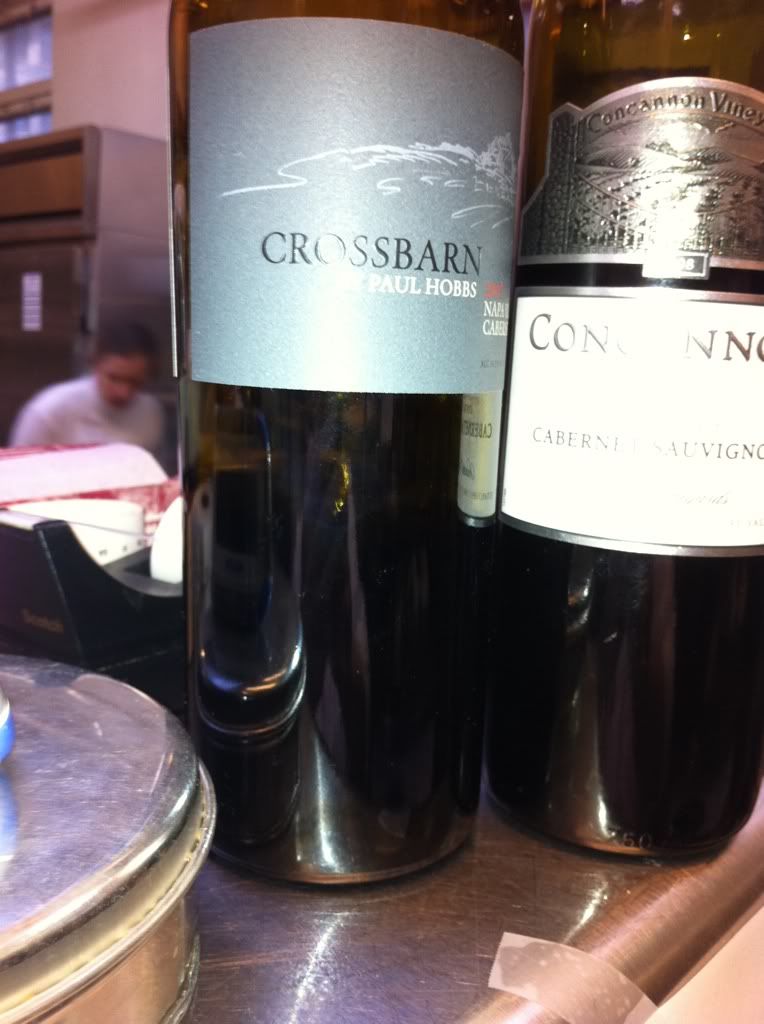
Wine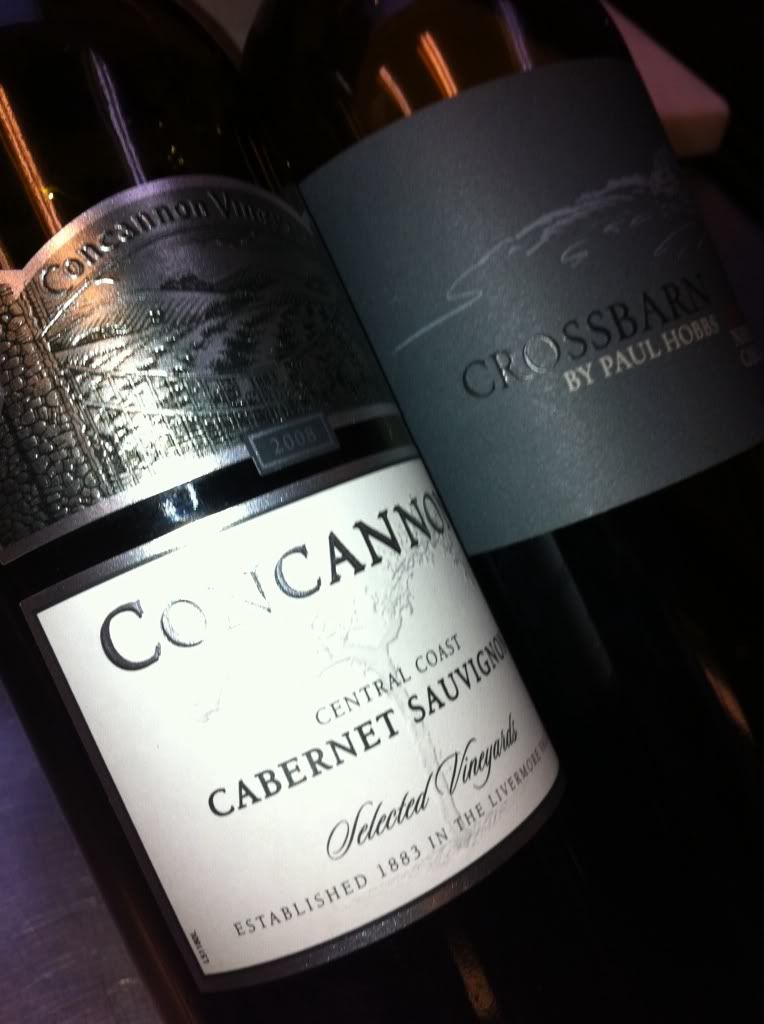
The fond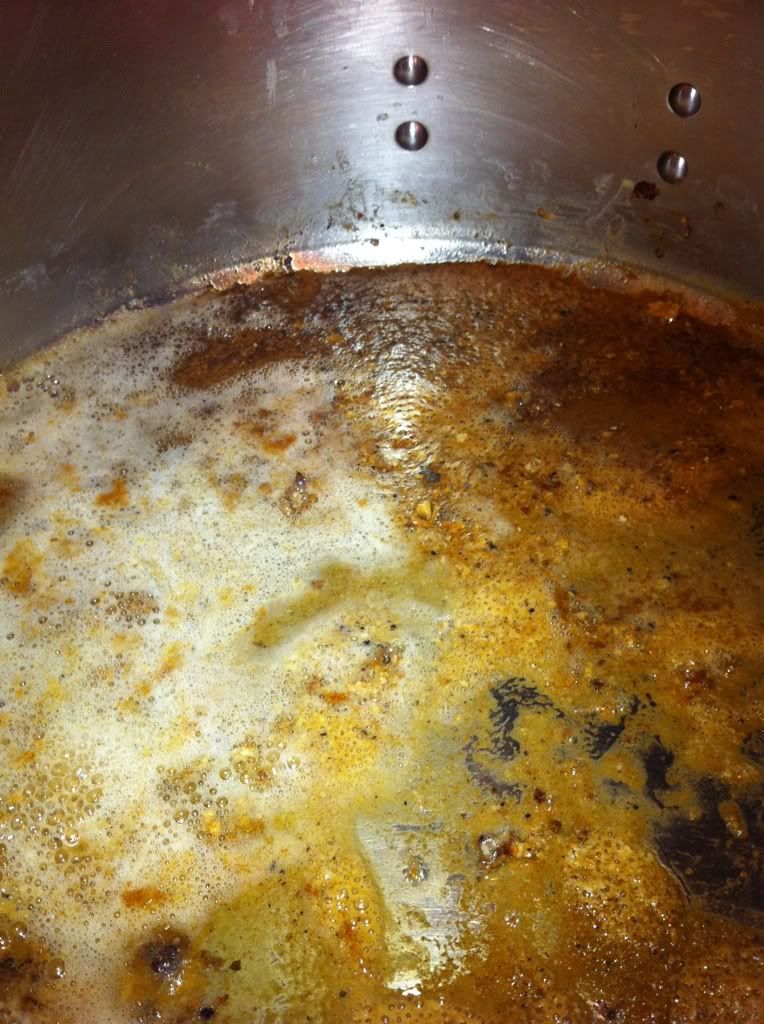
Chicken stock. Notice the ladle sitting on top of jelled stock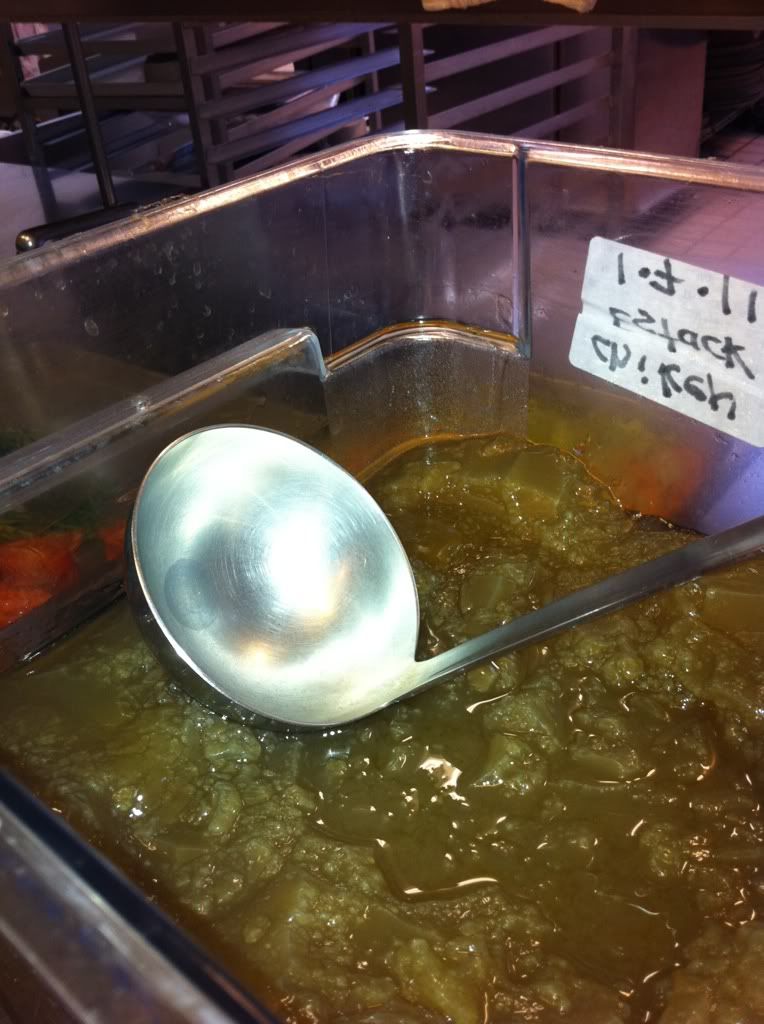
Braising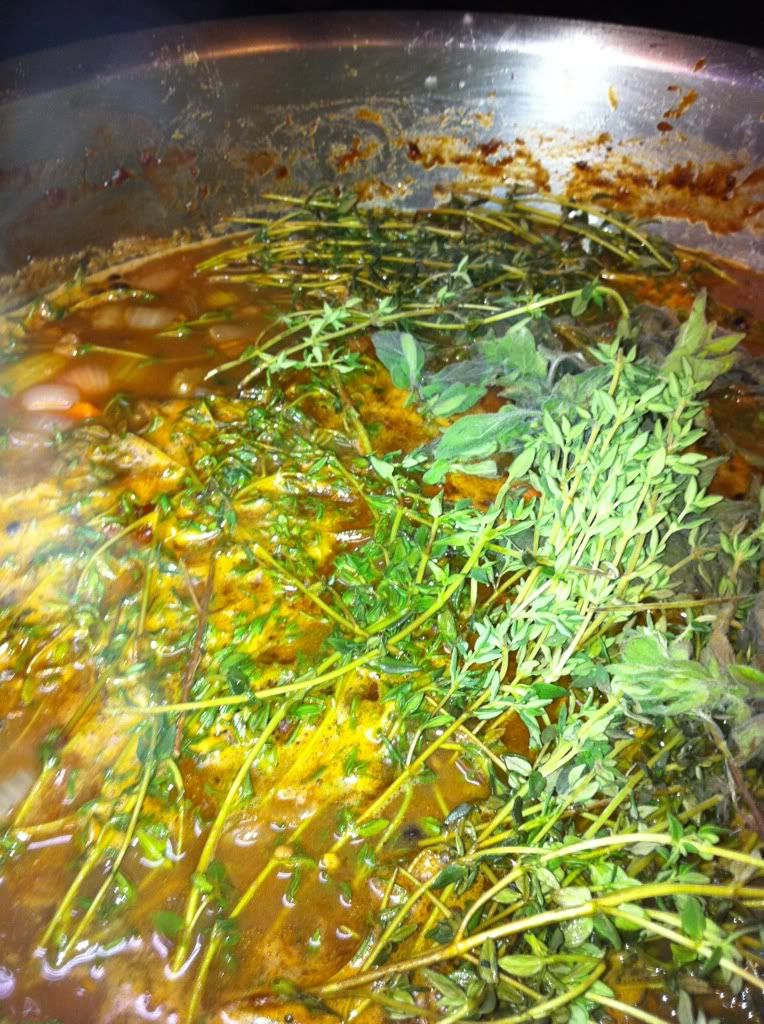
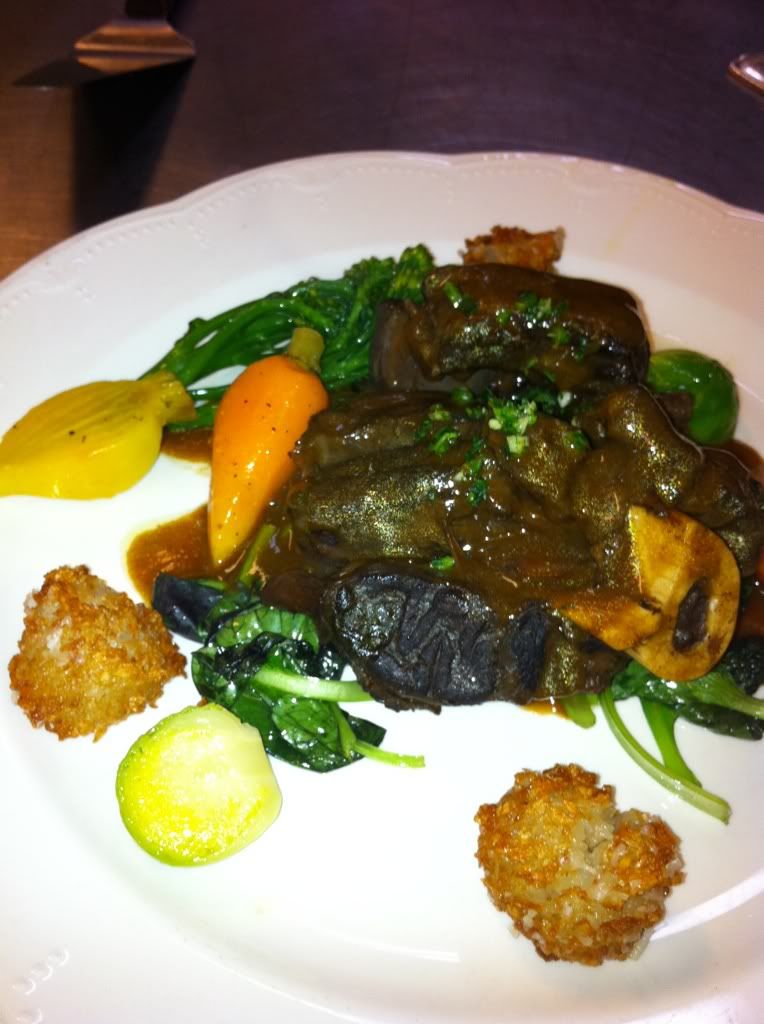
Michel Richard's tater tot recipe (new issue of Saveur) deep fried in rendered duck fat, and then tossed with Reggiano Parmesan and Fleur de Sel
 Last edited by Evil Ronnie on January 13th, 2011, 9:42 pm, edited 1 time in total."Bass Trombone is the Lead Trumpet of the Deep."
Rick Hammett
-
-
-
-
Post #24 - January 11th, 2011, 4:25 pmEvil Ronnie wrote:
Michel Richard's tater tot recipe (new issue of Saveur)
And found on their site - http://www.saveur.com/article/recipes/S ... Tater-TotsLeek
SAVING ONE DOG may not change the world,
but it CHANGES THE WORLD for that one dog.
American Brittany Rescue always needs foster homes. Please think about helping that one dog. http://www.americanbrittanyrescue.org
-
-
-
-
Post #25 - January 13th, 2011, 6:49 pmWe're going with lamb shank rather than venison. 50 lamb hind shanks in marinade today, to be braised next Tuesday and served on Thursday.
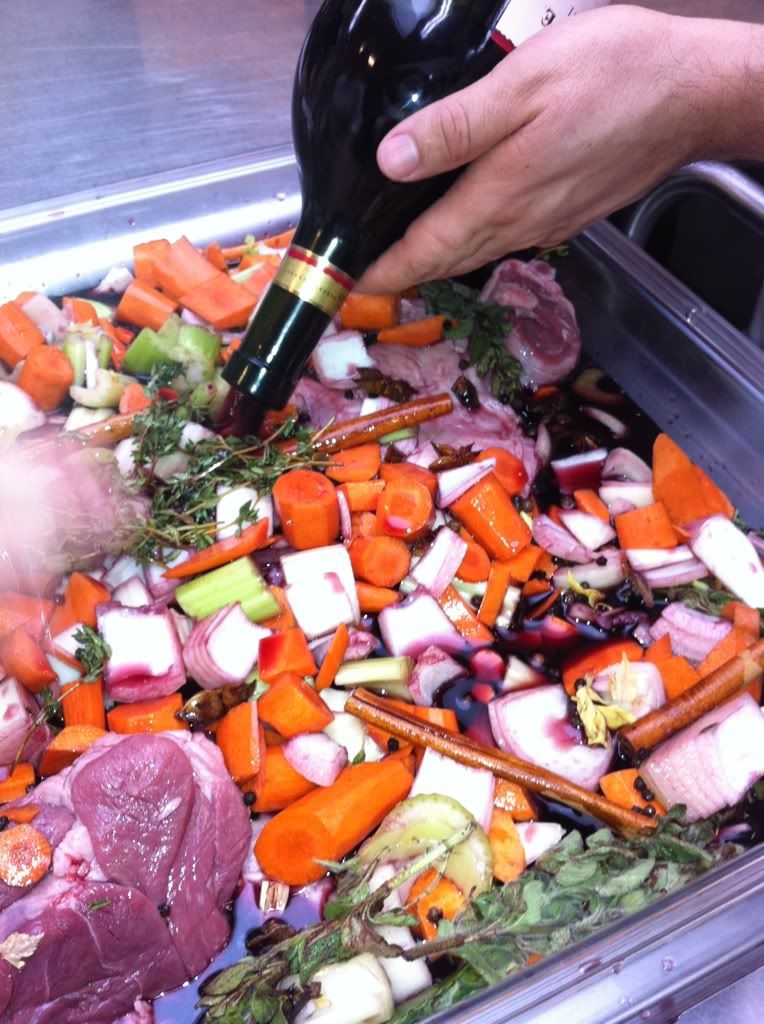
"Bass Trombone is the Lead Trumpet of the Deep."
Rick Hammett
-
-
-
-
Post #26 - January 13th, 2011, 8:50 pmWow, a 5 day marinade. I would have thought the meat would get stringy, but I guess you've had success with this. Any thought about braising them earlier and letting them sit, cooked, in braising liquid for a longer period of time?
-
-
-
Post #27 - January 13th, 2011, 9:35 pmWill you let them sit in the liquid from Tuesday to Thursday or do you drain, strain, de-grease on Tuesday and store the shanks dry(ish) until Thursday? Looks really good!
Oh - the wine looks cheap and from a big bottle (a big plus for me for braising). What wine are you using?It is VERY important to be smart when you're doing something stupid
- Chris
http://stavewoodworking.com
-
-
-
Post #28 - January 13th, 2011, 9:56 pmAtrill said, "Any thought about braising them earlier and letting them sit, cooked, in braising liquid for a longer period of time?"
Both methods work fine. Not sure there's a best way. I think it'll be fine.Darren72 wrote:Wow, a 5 day marinade. I would have thought the meat would get stringy, but I guess you've had success with this. Any thought about braising them earlier and letting them sit, cooked, in braising liquid for a longer period of time?
We'll pull them from the braising liquid when done and store dry, finishing the sauce day of serving, which will be more efficient for us with our small kitchen and limited storage space. Fewer last minute steps. Wines were miscelaneous reds left over from banquets. Lamb will be finished with a gremolata of parsley, garlic and blood orange zest.
"Bass Trombone is the Lead Trumpet of the Deep."
Rick Hammett
-
-
-
-
Post #29 - January 15th, 2011, 2:02 pmMy dad always swore by Gallo Hearty Burgundy for cooking meat. I should ask a friend what her mom used for her "booze beef" - I know her secret was putting a package of frozen peas in butter sauce into the pot before serving
We tend to use whatever's left at the end of the bottle - glasses here and there add up. If I had to pick one to buy, I'd suggest a Rhone or Rhone-style wine. I almost never use American Merlot (often too jammy) or Cabernet Sauvignon (often too tannic) all by itself.Leek
SAVING ONE DOG may not change the world,
but it CHANGES THE WORLD for that one dog.
American Brittany Rescue always needs foster homes. Please think about helping that one dog. http://www.americanbrittanyrescue.org
-
-
-
Post #30 - January 23rd, 2011, 6:20 amI don't think carnitas stray too far from the definition of a braise, so here are this weekend's lamb carnitas...
Lamb Shoulder:
One of the nice things of having a butcher like the Butcher & Larder is that you can get meat like this cut to your exact specifications. Rob Levitt took the big band saw to a whole lamb shoulder and gave me the exact sized-pieces I wanted, leaving on the bones I wanted for flavor and all of the fat, which is much-needed for carnitas and is frequently over-trimmed when not cut to order. I trimmed some of it off myself, but it was not to go to waste...
Lamb Fat:
Since my plan was to confit/fry the lamb in its own fat after it had finished braising, I wanted to make sure that the thicker chunks of fat would be fully rendered in time, so I gave them about a 30 minute head start before putting the meat in the pot.
Getting Started:
I kept things simple - just water and a couple of cinnamon sticks for the braising liquid. I wanted to make sure I let the lamb be the star, so I kept the other-ingredient list tiny.
Almost there:
After cooking in a covered braise for a few hours, I took the cover off the pot and let all the water evaporate. What you see above is the lamb starting to confit/ fry in nothing but its own fat.
Done:
Toward the end I had cranked up the heat to brown and crisp a bit of the meat in the lamb fat.
Lamb Carnitas Tacos:
Fresh tortillas heated on a griddle, avocado slices, onion, cilantro and a squeeze of lime...defended from strong temptations to social ambition by a still stronger taste for tripe and onions." Screwtape in The Screwtape Letters by CS Lewis
Fuckerberg on Food