
Could your parents cook? Who taught you?
Could your parents cook? Who taught you?
-
-
-
-
-
Could your parents cook? Who taught you?
-
Post #1 - October 18th, 2008, 11:36 pmAfter reading the Semi-Ho for a Day thread here, I got to thinking: How many of us learned to cook by example, versus by necessity?
When I was very young I thought that my mother was not a great cook, then suddenly something clicked: she discovered stir fry, spices, etc, and the bland stuff faded to the background. She ended up catering for a few years, in fact.
My father didn't cook much that wasn't on the grill, but he taught me to cook for myself, starting with scrambled eggs with stuff in 'em.
I married young, and we both learned to cook pretty quickly -- to me it's just a variation on other sequential instruction sets like computer programming or music scores... with room for improv, of course. I was always willing to experiment, even before that, for instance, making chilli for a bunch of guys on the floor one sunday night in college.
My kids are picking up cooking quite well, starting with basics like making, yes, Kraft Mac & Cheese from the package instructions and improving it (Thing2 likes adding sour cream instead of milk -- his own experiment), quesadillas, grilling a burger or a steak, and so on. Thing 2 has become quite a chef for Boy Scout campouts, making such things as Chicken Makhani, as well as other stews, breakfast burritos starting with ground beef and eggs, etc.
I have faith that they'll be able to feed themselves when they're on their own.
So how about you?What is patriotism, but the love of good things we ate in our childhood?
-- Lin Yutang
-
-
Post #2 - October 19th, 2008, 8:39 amI actually thought of starting a similar thread, as I bet we all have different stories about how we became interested in cooking and eating, and probably most start with our parents. To answer your questions:
Could my parents cook: No. My mother believed that she needed to reject preparing meals for her family in order to be a modern, "liberated" woman. Oddly, despite all that, the one dish my Mom does have up her sleeve is a mean apple pie. For my Dad, cooking was about opening the fridge and making do with what was there, not creating composed meals. I learned to cook because they did not.
Who taught me to cook? My maternal grandparents influenced me greatly. My grandfather was the forebearer to a foodie and localvore. The two things they enjoyed doing together most was cooking and gardening. While for most women, gardening meant having elaborate gardens with varietals of pretty flowers, for them, it meant growing almostly exclusively food; rhubarb, lots of varieties of peppers, tomatoes, eggplant, beans. And then they canned, so there was always really good food, even in the middle of winter. My grandfather was the cook, my grandmother the baker. They threw me into the kitchen young, and my gramps would be really effusive in praising me over simple tasks they'd give me, like stirring the pot "well." Even though I've had many more life opportunities than they did, and my palate and cooking repetoire is broader and consequently different than theirs, I still think that today they'd be proud of my interest in cooking even if I made something for them that they'd be pushing around their plates.
-
-
Post #3 - October 19th, 2008, 9:12 amTo quote myself from an old thread:My mother had the usual devotion to learning French cooking a la Julia Child circa 1970-- serious cooking out of books was present enough in our lives that I, as a 9 or 10-year-old, was aware of it when Michael Field, a popular chef and author of the 1960s, dropped dead at a relatively young age; and the family well remembers the serious day of labor she once put into Julia's duck a l'orange, which came to disappointment in the end when we realized that there was about as much meat on an entire duck as on a single chicken thigh. But besides such attempts at sophistication, she took her German Mennonite ancestry seriously in cooking matters though the rest of that faith and lifestyle had fallen by the wayside generations back; she still issues my sisters and me Christmas cookbooks full of recipes for vareneky and pluma moos and such things, and would inflict borscht, boiled tongue etc. on us for dinner as often as other moms made casseroles with crumbled potato chip tops.
Now one thing I've bemoaned is that my mom has, over the years, drifted toward the kind of cooking where you take Pepperidge Farm puff pastry and put some Lipton Cup-A-Soup French onion in it and so on. But fortunately, at Christmas time at least, her better inner cook reasserts itself and she still makes a bunch of stuff from scratch, or scratch-ish (it wouldn't be my grandmother's authentic 50s chipped beef without weird sheets of meatette™ shredded into Kraft Philadelphia cream cheese with Fritos to dip in it, but other things are made from scratch).
However, she didn't actually teach me to cook much of anything. So I went through a few dark years before I started teaching myself out of books, starting with Japanese and Chinese food in a wok (which I shamefully overcooked into mush). But I certainly give her credit for the expectation that food was something you made yourself with some care and love.Watch Sky Full of Bacon, the Chicago food HD podcast!
New episode: Soil, Corn, Cows and Cheese
Watch the Reader's James Beard Award-winning Key Ingredient here.
-
-
Post #4 - October 19th, 2008, 9:59 amThis is an interesting theme to pursue. My mother, who worked full-time from about 1966 on, had a few staples she repeated randomly. Nothing earth shattering or especially creative but quite edible and usually quite simple. Indeed my father claims to have taught her to make pot roast.
What she did give me, however, was a sense of confidence in the kitchen. She never turned down my offer to "help" and by age 8 there were many things I could do myself. By age 10 I was baking with no supervision. I had quite a few friends who weren't allowed in the kitchen, much less encourged to be creative. They all came over to my house where a favorite sleep over activity was to bake cookies from scratch. I think I learned as much by doing and observing as by any direct instruction from Mom.
Both my parents enjoyed eating in small, store front ethnic restaurants and they took us kids along. My father's idea of going out to eat involved foods he couldn't (or wouldn't) usually make at home. My childhood was filled with forays into Korean, Peruvian, Japanese, Mexican, and Chinese restaurants. I could use chopsticks at such a young age that I don't remember learning how. I think much of this was driven by price (so many of these places were pretty cheap) but a sense of looking for new flavors and experiences helped. Mom subscribed to the Time/Life Foods of the World cookbook series and still keeps a couple on active duty in her kitchen. She, too, kept Julia Child on a shelf and it sat next to her 1957 copy of "The Joy of Cooking". I've got those books now plus a 1939 cookbook for children that my mother received on her 9th birthday from her mother. That one is annotated with Grandma's notes on ingredient costs.
My parents also liked to travel and travel introduced them to new foods. They would bring their newly acquired tastes home and share them with us. Although I still won't eat grasshoppers
I'll never forget Home Ec class in 7th grade. It was 1970 or 71 and we were to spend a semester on cooking and sewing. I was really excited to be turned loose in classroom kitchen. Boy was I disappointed. I learned a really interesting lesson about adults that year. My home ec teacher couldn't cook and I came in knowing more techniques--really basic ones--than anyone else in class. I had no idea that my experience wasn't the norm.
I still do things my own way."The only thing I have to eat is Yoo-hoo and Cocoa puffs so if you want anything else, you have to bring it with you."
-
-
Post #5 - October 19th, 2008, 10:32 amI forgot completely about home ec.
I am old enough that there were still separate boys (shop) and girls (home ec) classes in middle school, with a short period each year when we'd swap. Memory fades, but I think this stopped by my 8th grade (Title XI had been in effect for a few years, but it took time to filter into policy).
I remember sewing a laundry bag (that I used through college) and a bean-filled frog. If cooking included things other than dessert, I have forgotten: I remember filling cream puffs, making yeast-raised sweet rolls, frying doughnuts, and the first thing we made was a brownie recipe that I still use today (it's even easier now than it was then: with a glass bowl, the chocolate and butter are melted in the micro and dry ingredients added, making it one bowl, one pan and you're done).What is patriotism, but the love of good things we ate in our childhood?
-- Lin Yutang
-
-
Post #6 - October 19th, 2008, 12:32 pmI'm guessing my mother never really learned to cook at home; in Buenos Aires, where she grew up, they had a live-in cook. Upon becoming a working housewife in the US, she faithfully subscribed to "House Beautiful" and "Better Homes," as well as watching Julia Child and Company and the Frugal Gourmet with fervor. She is exacting and scientific when following a recipe, and the source of her few Argentine dishes (most of which have been shared here somewhere) is unknown - all are written down and followed to the letter. These did at least offer a look into foods no one I knew ate. As cooking was science, children weren't allowed in the kitchen unless they could perform tasks exactly and cleanly. Food was, however, a frequent subject of discussion at our house: my father would often comment "they just [do or don't] love food. You can't be a good cook unless you love food; loving to feed people isn't enough." Even though my father was also banned from the kitchen when I was a kid, this phrase stuck with me.
I am many things, but nobody who knows me will accuse me of being either exact or clean. I occasionally would defy my mother and bake cookies from the Fannie Farmer or New York Times cookbook, but the idea that I might one day prepare a meal was preposterous. As I grew older, my cooking chores increased to three: making pureed Avocado on toast points, and adding carefully measured cream and sherry to mashed sweet potatoes, and occasionally I was allowed to smear chicken parts with olive oil, oregano, and salt prior to roasting.
I used to read cookbooks for pleasure even back then (including, wistfully, the Time-Life Foods of the World coffee table books) and wherever food appeared in kid's literature it fascinated me: CS Lewis, JRR Tolkien, Laura Ingalls Wilder, Louisa May Alcott, Dickens, all gave me a glimpse of food from other times and places that required understanding: extracting, reducing, chopping and folding. Our very kind neighbor understood my leanings, and introduced our family to butter lettuce and mole sauces, and would talk to me about cooking as though I was capable of doing it. Marshalling my courage, I bought a kid's cookbook from Scholastic Books at school and made whole wheat bread from it in one of my stolen kitchen moments.
As soon as I got my own apartment, I began to buy ingredients and experiment with them, vowing war against the boxed noodles my college-mates lived on. I remember one of my first dinners was a simple quesadilla with sliced fresh green and orange peppers. Many of my dishes, then and now, were abject failures, but they all taught me something: either something about technique, something about culture, or something about the ingredients themselves. For better or for worse, the world of food is broad enough to continue to offer me something new to ruin and learn from.
-
-
Post #7 - October 19th, 2008, 12:48 pmI grew up on some of the worst cooking imaginable. Staples of my childhood included frozen dinners, spaghetti with ketchup and butter (still crave this every now and then), and - when it was time to go gourmet - lamb chops broiled until they resembled hockey pucks.
Real cooking started for me in college. I was a football player in high school, and was recruited to play in college - but a Freshman year serious injury ended my career. Relatively depressed and completely without money, I decided to occupy my newly-found free time - and make some cash at the same time - by starting a little business with my football player friends as my main customers. For 3/4 of the price they paid to eat dorm food, I would cook and serve bigger and better meals - or they'd get their money back. I had 9 takers that year, and felt a ton of pressure to produce. I borrowed every cook book the library had, and learned fast. This was not a particularly discerning customer base, so I found that careful shopping (e.g., low grade beef) and big portions (1.5 pound burgers, for example) could earn me praise, a growing customer base, and a moderate profit. I really started having a blast with this, and over time upped my game quite a bit, cooking things like stuffed peppers and homemade pies for the happy crowd. I knew I had really made it when some non-football players joined the customer base, including a couple of women! That's when I doubled my effort to learn how to cook and impress....defended from strong temptations to social ambition by a still stronger taste for tripe and onions." Screwtape in The Screwtape Letters by CS Lewis
Fuckerberg on Food
-
-
Post #8 - October 19th, 2008, 1:49 pmMy father didn't do much of our cooking, aside from a few times a year when he made some type of oat meal cookies. My mother grew up in the South so most of what we ate was a steady rotation of Southern favorites. Meatloaf, corn bread, biscuits and gravy, baked pork chops, collards, catfish, pimento cheese,banana pudding, red velvet cake ect. My mother still bemoans the lack of 'good' green beans up here, she likes white half runners.
By the time I hit college I realized that my mother wasn't great at seasoning her food, and that most kids had a much wider range of stuff that they ate. I started watching the Frugal Gourmet on PBS pretty faithfully on the weekend and eventually started to teach myself a lot of dishes that were new to me.One Mint Julep was the cause of it all.
-
-
Post #9 - October 19th, 2008, 8:16 pmMy mom was, and still is to this day, your typical southern junior league cookbook type cook. We grew up eating lots of casseroles. She subscribed to the theory that vegetables were best when covered with cheese, cream soup and bread crumbs of some type. Holiday meals at her house are dominated by these types of dishes along with tenderloin and steaks cooked well done (You'll get sick if you eat it any less done or don't pray before you eat it.). To me, all of these dishes, whether they contain squash, broccoli or asparagus, all taste the same.
My sister cooks the same way that mom does. To this day, when I come to town, they turn up their noses at things like roasted vegetables, prosciutto and melon, spanish spiced turkey stuffing.
She did have a couple of really good recipes for "company dinners" that she seems to have forgotten over the years as her memory has slipped. To this day, she made one of the better Indian style chicken curries that i have ever eaten.
I developed an interest in cooking after my very quick and very young divorce. I recognized that a life of hot dogs and spaghetti were in my future if I didn't learn to cook. This was in the late 80s about the time that I took on a roommate to cut costs. He was a grad student from Mayalasia. One day, he took me to this wonderful small store that specialized in Asian foods. It was there that I became introduced to such exotic things as fish sauce, dried shrimp, and thai chilis. Together, we would construct dinners that burst with interesting flavors that only cost pennies to produce. Needless to say, I was hooked.
Based on that introduction to food, I became addicted to PBS cooking shows like the Frugal Gourmet. Jeff Smith's "Frugal Gourmet Cooks American" was my first cookbook and to this day contains my "go to" slow cooked pot roast recipe.
Later in life, while living in a rickety walk up in the West Village of Manhattan, after smelling the bounty of her preparation of a large Italian American Sunday meal each weekend, I convinced my grandmotherly Italian landlord to trade me cooking lessons for my handyman skills around the building.
I've been fortunate to have these experiences, as well as to have met so many people from so many different cultures who have introduced me to so many interesting and authentic cuisines.
-
-
Post #10 - October 19th, 2008, 10:00 pmMy mom was (and still is to this day) a great scratch cook. She learned to cook from her mother-in-law, as her mother was not a great cook. (The enduring memory of my visits to my mom's mother's house in Alexandria, Louisiana was that all she could really be counted on to have in the cabinets was Total cereal and a handle of Old Crow bourbon.) My father's mother was from French Settlement, Louisiana, but 15 or so years of living in France, Italy and the Philippines during my father's childhood added some whiff of the international to her solid repertoire of Louisiana cooking and she imparted a good mix of traditional Louisiana cooking plus those European and Asian influences to my mother.
I think the key for me in learning to cook was that my home was one of those that if you were around while meals were being prepared, you were put to work, whether it be peeling potatoes, washing vegetables, or something more involved. Although our children are very young (two boys, one almost 3 and the other 8 months), I have tried to get our older son comfortable in the kitchen by putting him up on the counter and getting him involved in doing something, whether it's scooping seeds out of a winter squash, spreading peanut butter or jelly on bread, or shelling peas. Baking is really good with my son -- while he is somewhat messy and oftentimes less than precise, he loves measuring out the dry ingredients and mixing them around. I think that demystifying the kitchen and cooking and teaching kids that the food that ends up on the table is the result of a process in which they can and should be involved is one of those things I picked up from my parents and want to impart to my kids. Similarly, I hope that taking my kids to the farmers market (which is a weekly ritual) and having them meet see the bounty and meet the people who grow their food will help instill in them the understanding that food actually comes from somewhere and doesn't just magically appear in the grocery store or in our refrigerator.
-
-
Post #11 - October 20th, 2008, 8:27 amOn the other end of this discussion, one of my proudest moments: Sparky and I were making something with whipped egg whites; we were adding ingredients and I turned to him and said "Now, you need to fold that in to the egg whites. Do you know what fold means?" Wordlessly, the child picks up a spatula, looks me in the eye, dips it into the eggs and executes a folding motion that would have recieved applause at the CIA. My heart skipped a beat.
-
-
Post #12 - October 20th, 2008, 3:56 pmMy mother was, self admittedly, a less than stellar cook. As metioned above, caseroles with Lipton onion soup, cheese (or its approximate), cream of mushroom souped dominated the menus. Sunday we could always count on what my sister and I lovingly refer to as "Mom's Ruin Roast". Every once and a while Mom would decide a certain casserole was my favorite. The one that held that title the longest was an abomination called Rueben Casserole. Canned corned beef, sauerkraut, CoM soup, and cheese. At least it was real cheese usually.
She could bake though, and encouraged us to help. As of about age 9, I was the main provider of Snickerdoodles and Jiffy cakes at our house.
I learned to cook out of the neccesity of bachelorhood and low income. It was a slow process. Like others, TV cooks helped open my eyes and taught technique. Frugal Gourmet, The Cookin' Cajun, Pierre Franey, to list only three, really helped me develop. A year working in a Ritz Carlton as a room service server really helped put some polish on my cooking. Rule: When you work near a good kitchen, always be nice to the chefs and assistants - you'll eat well and learn a lot.
Another thing my former wife and I used to do is try to deconstruct dishes we had out. Sometimes we'd be relatively successful, sometimes we'd miss but end up with something different that we still liked.
I guess overall it's just been a progression of different things and methods driven by a desire to eat well at home.
-
-
Post #13 - October 20th, 2008, 7:54 pmMy mom cooked almost everything from scratch, but didn't really season anything. So we didn't have much of the can of this, can of that type meals (she did still make cream of mushroom soup casseroles) but the food wasn't really good either. We ate very standard Midwestern kind of food - almost nothing that could be considered ethnic. To be fair, my mom was pretty good at cookies and such. (Her cakes and frosting were always from a box, but box cakes have their place.) The standout difference was a few times a year when my dad would cook Chinese. It wasn't the most authentic in the world, but considering we lived in a town without even an Americanized Chinese restaurant, let alone a real one or any kind of source for ingredients more exotic than soy sauce, he did pretty well. I always asked for my dad's Chinese on my birthday. Unfortunately, my dad rarely cooked; my parents very much had a "the wife does all the cooking and cleaning" type of relationship. But my dad did keep a big garden, so we had tons of fresh produce all summer. I think the main thins I learned from my parents were the value of from-scratch cooking and good, fresh produce.
In high school, I had a few friends whose moms were much more adventurous cooks. After I got over the shock of realizing that food cooked at home could have as much (or even more!) flavor than food from a restaurant, I was always happy to go over to their houses for dinner. I got interested in cooking myself, and started with desserts. Somehow I landed on cheesecakes and would make a cheesecake or two a few times a month just randomly when my friends were over or whatever. From there I started branching out to other desserts and helping with dinner more, which quickly became making dinner a night or two a week.
A few years of college eating crap and having no access to cook at all (the dorm I was in didn't have kitchenettes at all) got me thinking about just how much I love to cook and I decided to switch from engineering to culinary arts. So I guess I learned most of what I know from going to culinary school...
-
-
Post #14 - October 20th, 2008, 8:49 pmI honestly can't remember a time when I wasn't cooking.
There's a picture of me next to my mother in the kitchen. I'm probably a bit older than 2 -- maybe 2 and 1/2 or 3 but not much more and we're standing at the counter -- my mom on her own two feet and me standing right next to her on a step stool. We're deep in concentration on something at the counter, our heads bowed -- her brunette bob, my bright orange -- probably dough or some other sort of prep work and we're wearing these lovely polka dotted matching dresses that she made for us. The late 60s were filled with matching outfits. The 70s would bring the birth of barbie clothes that matched my outfits but I digress. It's one of my favorite pictures.
Anyhow -- i think I was not taught to cook so much as soaked it up from my Mom like bun soaks up delicious meat juice from a perfectly rare burger. My mother always cooked from scratch and even when she used shortcuts, they seemed like they were cooked from scratch. She was a great Midwestern cook but she also experimented. She was the only mother I knew who regularly made us chinese food -- I have wonderful memories of folding wontons with really yummy pork filling -- watching them bob in the boiling oil -- which I was allowed to watch but not get too close to. She wasn't incredibly adventurous but much more so than your average Michigan mom. She had those Time Life Foods of the World that Mhays mentioned -- I just loved those books. There were two of each volume -- a big picture book and an accompanying spiral bound recipe book. She'd pick one up and we'd have a dinner from Russia -- i still remember how delicious the Chicken Kiev smelled -- the smell of chive and butter and I remember the disastrous incident with Rigo Jansci -- a several layered chocolate dessert that didn't really turn out the way she wanted (she always found something to be improved on with her cooking but all of us were plenty happy) but I remember it tasting okay to me. So...my Mom had/has chops. She was patient and happy to have help and I always wanted to help. All of my friends wanted to eat with us -- a lot. I still have a friend who signs about her chicken.
So...i learned though osmosis with my mother and countless thanksgivings and christmases and dinner parties and reading (my mother also had the best collection of cookbooks -- a collection that to this day I can sit and page through for hours quite happily -- despite having looked at them most of my life) and tasting and trying to figure out how to improve. It always amazes me just how many people claim that they can't cook -- smart people, literate and fond of food and yet...they'd rather go without than cook for themselves. Maybe that's my motivation -- I'm a greedy girl who wants au gratin potatoes more often than someone else. That certainly explains my waistline.
I can't imagine my life without cooking. I mean -- I come home with groceries that most people would just look at in consternation -- it's all ingredients and very seldom do I buy anything that's frozen or in a box. It just doesn't occur to me.
-
-
Post #15 - October 21st, 2008, 8:21 amWhen I was young, I remember my Mom saying that my Dad taught her to cook. It's probably more accurate to say that my Dad told her what kinds of meals he liked, and she learned how to cook those dishes. In fact, my maternal Grandmother is a great cook, and I know my deceased maternal Grandfather had some dishes that he made. (My Mom has a recipe card for my Grandfather's eggnog--to serve 100 or more--which he'd make from scratch and serve at an annual holiday party.)
My Mom spent part of her childhood in Morocco, where the family had a cook. Some of the family's recipes would be executed from my Grandmother's recipes (imagine the cook taking the family's Thanksgiving turkey to the public ovens, before they had house with an oven), but other recipes (which I think of as "family recipes") actually came from their cook's recipe collection. My Mom and Aunt have told me stories about how they'd come home from school and, with help from their cook, would cook a sugar & water or sugar & butter confection that they'd then pour out onto a marble-slab table in the kitchen, then eat as it hardens. So my Mom grew up feeling comfortable in the kitchen.
I don't know as much about my Dad's cooking experiences as a child, but both he and my paternal Aunt are great and adventurous cooks, so they must have been allowed and encouraged in the kitchen as kids. When I was young, we'd spend a couple weeks each summer visiting my paternal Aunt & Grandmother, and my Mom says that one of her strongest memories from those trips is that she and my Aunt would experiment making new dishes...mu shu, including handmade pancakes, ebelskiver, etc.
When I think back to my childhood, I don't remember a moment when I wasn't permitted to help out in the kitchen. I'd be responsible for drizzling the melted butter into hollandaise sauce, or whipping egg whites for a cheese souffle, or helping to assemble a paella. My Mom and some of my friends' moms also gave regular cooking lessons to me and my friends.
My Mom planned out each week's menu in advance in a spiral steno notebook, and kept a log of the prior weeks' menus, so she could make sure that we ate a variety of foods without a lot of repetition. As a kid in the 1970s, we definitely ate a variety of ethnic meals (though with a distinctly 70s flavor). A typical week's menu might include chicken enchiladas; shrimp, chicken and vegetable tempura; homemade pizza; sukiyaki; shrimp scampi; stir-fried beef & peppers over rice; and pork roast. Today I love to flip through the loose-leaf cookbook that my Mom's assembled, and take a walk down memory lane. A lot of the recipes that I remember eating during my childhood are no longer in her regular rotation, but I still treasure them. One of these years I hope she'll give a copy of her cookbook to both my brother and me. I know we'd each treasure those recipes.
-
-
Post #16 - October 21st, 2008, 9:20 amLike earthlydesire, I can't remember not cooking.
My father is Greek, and my mother is American of German and Irish descent. Mom converted to Orthodox to marry my father, and was rumored to be a bad cook (according to my older sisters). By the time I came along (I'm the baby), Mom was an accomplished Greek cook. She learned from an elderly Greek Yia-yia (means Grandmother) who was a friend of the family. My father owned a restaurant, so food was our life.
For a long time I thought the foods I grew up eating at home (souvlakia, dolmathes, pastitsio, yemista, spanakopita, tzatziki, soutzoukakia, horta, etc.) were American. We all helped in the kitchen, and since Mom was a stay-at-home mother, I was at her side all the time before kindergarten. There was always something for my young hands to do in the kitchen. I clearly remember learning to brown pieces of meat while standing on a kitchen step-stool. It's a wonder I'm not burned to a crisp.
Remember the moussaka joke from My Big Fat Greek Wedding? I lived it. "You're eating moose ka-ka! Euwwww!"
When I was 11 I went to work in Dad's diner and realized, suddenly, we usually only ate lots of Greek food at home. It was the first time I saw a piece of meat larger than myself, a soup pot I could have bathed in, and a stove burner almost as big as a hula-hoop. I used to ask the cooks (mostly of Mexican descent) every food/cooking question I could about the non-Greek stuff, and they happily answered me.
I learned technique in the big kitchen with them, and improvisation and spontaneity at home with Mom. She only used recipes when baking. Everything else was a bit of this, a handful of that, a bunch of these, and a few pinches of those.
To this day, whenever we go to Greek functions and bring something to eat, all the other Greek ladies murmur under their breath about the ksenos (foreigner) and her delicious food. I think because she was an outsider, she had to work even harder to perfect her Greek techniques. Selfishly, it was all to my advantage and made me the cook I am today.got Mavrik?
radiopeter.com
-
-
Post #17 - October 21st, 2008, 9:23 amMy mom was born in 1922 and was second youngest with 5 brothers. During the Depression my mom cooked while her parents worked several jobs each. I'm sure they didn't have any cookbooks and I know not much money so I'm not sure how she learned but when I was growing up and until she passed away in 1980, she was a fabulous cook. She cooked everything from scratch, made her own mayonaise, salad dressing, ketchup, canned from the extensive garden that we all helped keep all while being very creative and adventerous. She scanned the newspapers and magazines for recipes, would clip them out and would, more often than not, make them with her own variation. She loved spices, especially garlic and was not afraid to use them! My favorite memory was when I was in my early 20's she knew I had a Mexican friend who would cook Mexican food for me. My mom never had eaten any Mexican food but she saw a recipe for enchiladas and made them for my birthday as a surprise. They were wonderful and that's the way I still make them.
My mom was also an excellant baker and loved to bake but was stuck with only my sister and I who didn't really like baked goods or desserts. My dad ran an Ace Hardware store at the time and my mom took to baking all sorts of treats daily for him to take to the employee break room. She was happy and they sure were happy!
When I got out on my own, I didn't go as far as making ketchup or mayonaise but I did and still do pretty much cook from scratch. In the past 5 years my partner has become vegetarian due to a medical condition. That has put some what of a damper on my cooking style and has sent me back to the cookbooks to figure out some new and different way to make veggies or bean dishes. My mom probably could have come up with something!
-
-
Post #18 - October 21st, 2008, 9:36 amI am pretty much a self taught cook, that and the skills I learned working as a cook for years.
My dad did not cook, so the cooking fell to my mom, and a live in babysitter we had when my mom was out of town(she was a flight attendant). My dad did not believe in any other seasoning than salt so food was pretty bland. On our weekly rotation was meatloaf, fried chicken, creamed tuna on toast, etc. Sunday's my mom would make a roast(beef,pork,chciken), which were pretty good, she makes really good gravy. The live in babysitter made great scratch deserts(brownies, rhubarb pie, etc).
I got a job working at a small restaurant in Naperville that specialized in Philly Cheesesteaks and Hoagies(Donti's rip). I was finally exposed to some flavorfull foods, meats,and cheeses. I worked the grill, and learned the business. I then went on to cook at one of the major Italian restaurants in Chicagoland, some chains(worked pretty much every position in the kitchen), a short order cook, and as a banquet cook. I also worked for a few years as a food buyer for Hyatt. Between all these stops I picked up a little here and there, and learned how to cook. I asked alot of questions, practiced alot, and of course ate out alot to learn what I liked, technique, and also where to buy the items I needed.
I consider myself a scratch cook, and hope my 2 year old daughter is interested in cooking so I can teach what I know.Last edited by jimswside on October 21st, 2008, 12:24 pm, edited 1 time in total.
-
-
Post #19 - October 21st, 2008, 12:22 pmMy mom hated to cook, unless it was a cake from a box.
My dad expected her to cook dinner, as she was the stay at home parent, but constantly criticized her cooking. On weekend, however, he would cook "experimental" dishes (at least for our time and where we lived). He had traveled to Japan when he was in the Navy, and had an appreciation for cuisine apart from American.
We would go to the only Asian grocery in our town, and buy supplies. I remember the stinky fish/asian vegetable smell, and we would get rice candy if we were good. He made buckwheat ramen for himself for lunch, and we would beg a taste of "daddy's noodles". Every christmas, we would roll eggrolls together as a family. He pressed his own tofu from soybeans, and would have gross containers of soaking soy sitting around the fridge. When we would have friends over for dinner, they thought we ate the strangest food. He would also get my mom to cook german food, but of course she never got it right like his grandma, and he was constantly dissapointed in her attempts at coconut cake.
He dug up the previously landscaped sideyard and planted tomatoes, and the neighbors complained. We moved out to a swanky exurb development years later, and he dug up the back 7 acres with a vintage John Deere and planted it, much to the annoyance of neighbors. He also tapped the trees and boiled his own syrup in a cooker made of an old can, and also built an oil can smoker.
I totally share his love of cooking, that's why I'm here!
-
-
Post #20 - October 21st, 2008, 1:18 pmOy. Where to even begin?
My father's side of the family never figured much in our lives, so everything springs from my maternal grandparents. My grandmother was a great cook in the Ashkenaz-Jewish-Polish tradition. This was somewhat refined by decades of life in Riverdale and exposure to the NYT and Craig Claiborne, but not much.
My mother took this refinement much further, and did very little of the Jewish cooking (it was pointless to try one's own latkes or pierogi or stuffed cabbage when my grandmother's were untouchable, unapproachable).
Here's was very NYT influenced. Lots of "continental" touches, but very sparing use of herbs or spices. Garlic was seen as peasanty. We ate at northern Italian restaurants because they were understood to be sophisticated, whereas southern Italian restaurants were also rustic, garlicky, and lesser. We ate and fancy chinese restaurants in NY for special occasions, and very occasionally 1 Indian one. There was no sense that this was food one could attempt on one's own.
My mother's dishes usually got a dose of some form of sophistication and gentility via the NYT, e.g. her. chopped liver involved a major proportion shift toward carmelized onions and a bit of port or sherry and so was far smoother and sweeter than the coarse Jewish version with chopped egg that my grandmother continued to produce.
There was a dessert called "Swedish Creme," that all the family and all guests worshiped as the height of elegance. I haven't had it in decades but I recall it as quite delicious. It involved the use of unflavored gelatin to set a blend of sour cream and heavy cream (I think), and sugar and vanilla. This was then served with fruit on top. In some ways it was mock flan, I suppose, but to us it seemed like something that Grace Kelly would eat after dinner.
There was "Chinese Chicken" which, I guess, was everyone else's chicken a la king. We didn't grill, and while my mother could do a lovely roast, we almost never had burgers. Her lightly breaded veal cutlets were wonderful, until she decided they were immoral. She did make her own chicken stock and her soups were wonderful, both french style pureed ones as well as brothy ones. Her vichyssoise was fantatstic. She also made pears poached in red wine which everyone loved and I found revolting. (Not so much the final dish, but the smell of the seasoned red wine simmering on the stove for hours.)
However, none of this got me interested in cooking for myself. It all seemed magical. Not something one could aspire to at all.
I was sent off to college with a small box of simplified recipes that I could follow, but didn't begin to think about cooking until I was befriended by the classic bachelor english professor who opens the doors to everything at once: cooking, wine, music and opera, and literature (both curricular and extra-). This coincided with the Italophilia of the early 80s, boosted by the then almighty dollar.
Olive oil was key. I'd never had it before. Imagine being 20 before you smelled fresh basil and olive oil for the first time.
Wine was also a major revelation. At home we had Bolla on special occasions, or Asti Spumante. That was it. My folks just didn't have a taste for it. Now, at school I was tasting Rhones, Rieslings, Chiantis, Barolos (natch)--all perfectly affordable in those days.
I'd go over to my friend's for dinner and see that all of this delicious stuff was perfectly doable. Not sorcery at all. Start with good stuff. Put it together. Eat it.
I remember very clearly one evening, helping to tear up basil leaves, chopping some garlic, then lifting a glass of cheap, good, white cotes du rhone to my mouth and the herb smells on my hands mingling with the aroma of the wine in the glass and knowing that my life had just changed."Strange how potent cheap music is."
-
-
Post #21 - October 21st, 2008, 7:10 pmMy maternal grandmother who was German american and was a good scratch cook. She taught me how to make all manner of cakes, tortes, kuchens, etc.
My mother worked and did know how to cook basic stuff and put a meal on the table every night. She was fond of modern shortcuts, cake mixes and loved any new thing such as hamburger helper and minute rice.
I started cooking in grade school and have been doing it ever since. My mom who is now in her eighties still does cook. She does a good job of basic dishes such as meatloaf, spaghetti, stew, potroast, etc. but mostly I like my cooking better.Toria
"I like this place and willingly could waste my time in it" - As You Like It,
W. Shakespeare
-
-
Post #22 - February 21st, 2009, 5:35 pmThis was such a touching and wonderful thread to read. Socioculturalgeneologicalculinary anthropology.
I thought of it today while watching Jacques Pepin cook with his daughter Claudette on his Fast Food My Way show. She's been on two or three shows this season and it adds a real teacher-pupil dynamic to the show, but also shows the tenderness and familiarity that only family can.
The way that he gently chided Claudette for not being a faster prep cook or seeing them bicker mildly about the right way to do something, it reminded me of coming of age in my mother's kitchen. She was a working mother who often would broil chicken breasts with basted barbeque sauce (coincidentally, it turns out she particularly liked the stuff produced by BuddyRoadhouse) and steamed green beans, cauliflower and broccoli - with a host of frozen vegetables too. This was the defining memory meal of my childhood and early adolescence. Ater a bout with breast cancer, she entered a study that theorized that maintaining a very low intake of fat might help to prevent recurrence. This changed the way she cooked and the food we ate. It probably made her a lot more conscious of the cooking choices she didn't know she was making.
My dad grumbled, but the family changed and rolled with the punches. It was then that my mom subscribed to Cooking Light and discovered spices. Specifically, she discovered the Spice House. I learned the flavor that various and fresh spices can impart absent too much fat. Still, I was more a baker than a cook through high school. Baking recipes seemed black and white, as easy as following directions. But it felt good to feel I could do something in the kitchen and have it turn out.
The food awareness dawned a bit I think a defining moment was when my mom was out of town on business and my dad was responsible for the meals. He made one dish where he browned ground beef and added tomato sauce, but he grew tired of this over the years and we more often went out to dinner (I heard tell that in his bachelor days, he often would forgo cooking at all and live off of bagged pistachios). One night, he, my brother and I ended up at Applebee's. I don't know if it was the mediocre food, the obviously transplanted chain atmosphere or the idea that maybe a whole fleet of restaurants like this had proliferated across America so grown men who never learned to cook could feed their children when their wives went out of town - but something was profoundly depressing about the whole experience.
In college, I lived off-campus and the forays into cooking were fairly simple - meat sauce over pasta and the like. But soups and stews were a gateway food to cooking. Here was something that you could cook once and have all week. It didn't demand precise cuts or fancy ingredients or equipment. And you could do it with friends and feel like you'd done something.
I cooked for myself the whole next year when I lived in a small village in Japan teaching English. But there, I clung to some American comforts and the Japanese cook book I had brought with me. Many a night I enjoyed a simple bowl of rice with a robust bowl of hearty miso soup (you can add more than just tofu and scallions). All of this in a tiny apartment and meager kitchen space (the shower stall was so small, I dubbed it Battle Shower for the daily struggle I underwent to clean myself, thumping elbows into walls like a hockey enforcer all in the name of hygiene). I undertook some more ambitious projects like making my own gyoza, buying and cooking live crab and participating in moch-making over new year's. But my skillset and comfort level was narrowly focused.
It was once I had returned that I started cooking in earnest, learning as much from Good Eats and food TV as I had from my family. I sought out new cuisines, discovered Cook's Illustrated, started sharpening knives and buying better ones, getting decent pots and pans. Soon we had three cooks in the family: my mom, myself and my brother who had also caught the bug. My mom likes to say that she doesn't know what got into us, but around the same time, both her sons learned they liked to cook. And in this family, when people share passions, they all want to speak their mind and debate about the *right* way to do things.
Now whenever we all cook together there is very little counter space, much backseat driving and a lot of food conversation over...well...food. These days I impudently chide over some technique - which generally earns me eye-daggers from the woman who bore me- but that's part of being a family too, finding a way to relate to each other as independents.
All of this was brought to mind by watching Jacques and Claudette interact. If you appreciate this communal kinship in the pleasure of cooking, you should check out the show. I mean I certainly enjoy it anyway as I usually I learn something from watching Jacques, but when his daughter is on it brings a smile to my face seeing the unique way that families communicate and learn from each other and take love and pride in the simple act of feeding each other.
-
-
Post #23 - February 21st, 2009, 7:18 pmMy mother was 3rd generation Italian but her mother died when she was 14. Up until her mother passed she lived on Taylor Street. She learned to cook from her aunts. My childhood was filled with Sunday dinners of big pots of gravy with braciole & meatballs, all on top of macaroni (she, to this day, does not say pasta). During the week was standard American fare for my Polish dad, who liked a balanced meal (meat, veggie, starch). She did not let me help in the kitchen, so as a teen I began experimenting with cooking. My parents divorced when I was in second grade so there was not much money or food around. I began finding recipes in my parish cookbook for things that were already in the house, mostly a cinnamon coffee cake.
We had the great fortune of having a Greek family across the alley from us who introduced me to feta cheese with freshly baked hot bread and grilled lamb. Those new tastes astounded me and all I could want is more.
In senior year of high school I took a cooking class. The nuns who ran the school were Polish so it was there that I learned how to make potato/onion pierogis from scratch. Huge hit at my house since the ingredients were so cheap. I moved out at 23 and once on my own, I cooked up a storm. The first dish I perfected was chili, as my mothers was mostly kidney beans and ground beef, so watery and not enough spice.
I had my daughter in the kitchen with me early on, as I missed out on the experience. She took to it immediately and it astounds me when people tell me their teens do not know how to cook at all. I advise them to pull them into the kitchen and start teaching, better late than never. Today at 24 she is a most talented cook and I am proud.
-
-
Post #24 - February 21st, 2009, 8:20 pmDad
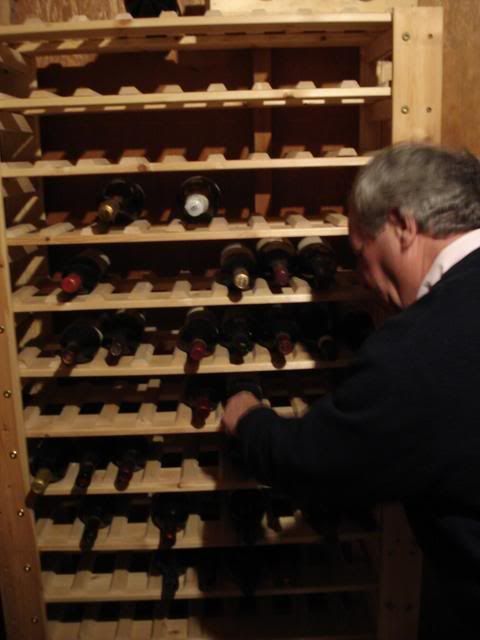
Mom
Need I say more?
-
-
Post #25 - February 21st, 2009, 11:18 pmI learned from both parents. Mom was a full time housewife, and cooked from scratch. Nothing fancy, but good food. Plus lots of baking, especially cookies and cakes. Dad only did the grill, and complex stuff: spaghetti sauce, fancy tenderloin, lamb kabobs, etc. It usually took mom a day to clean the kitchen after one of dad's projects.
Then there was a handful of years as a boy scout cooking over an open fire.
Plus years of watching PBS. I remember watching the Galloping Gourmet, but didn't start cooking from TV until the Frugal Gourmet came along. I still have all his books, plus the old PBS "Dining in Chicago" series, and more.
-
-
Post #26 - February 21st, 2009, 11:55 pmI grew up cooking, baking and canning from an early age...my mom, my two grans, my two great grans and about six great aunts all cook when I was growing up in the South. The men also cooked since they didn't trust anyone to cook the fish or game that they caught
Everything was about making great tasting food from scratch and big family meals so I was in the kitchen at an early age helping out. Holiday dinners were a big deal but fun because we were all in the kitchen making things. There was this sense of family when we were cooking and I always felt like a big girl when I was helping out. By the time I got to high school, I could cook a meal with no assistance....cleaning was another matter
One of my proudest moments was one Thanksgiving Day I got to make a dessert. It was a devil's food cake with white coconut frosting and we served it with homemade ice cream. Everyone commented on how well it turned out and I was so happy that my face was sore from smiling. All of my women folk were smiling and hugging me and I felt like I had passed a rite of passage into adulthood.
Funny thing is, only a few people know how well I can cook and bake...I just don't do it that often so a lot of people assume that I can't cook and are surprised when they taste something I have made. I had LynnB and her husband over several weeks ago and made an upside down cranberry apple pecan french toast bake in a cast iron skillet. I had a taste for something "Southern" like I use to have growing up, so went out and got a cast iron skillet and went to town. Preparing it I got a little nostalgic while listening to some Motown tunes, remembering the times hanging out with the women folk while preparing a meal."There comes a time in every woman's life when the only thing that helps is a glass of champagne."
Bette Davis in Old Acquaintance
-
-
Post #27 - February 22nd, 2009, 12:36 amMy parents have never been much to brag about and naturally never truly taught me much of anything beneficial in the kitchen other than working clean. I grew up with three brothers and working parents so the typical night would be hot dogs w/ mac+cheese, hamburger helper, or fast food. My Mom's baking is dry and only outsourced due to her own family turning it down.
 My Dad made a few tasty things but in ways that only left me with bad habits and cheap taste (good knowledge as an early college student though).
My epiphany was during H.S. when I started taking foods classes and entering little regional competitions which I won all four years and went on to state, yadda yadda. I figured food was the only thing I had a knack for and thought why not continue it. I had no knowledge of professional cooking or even family recipes so I've been behind the pack every step of the way but I'm getting there. Hard work and detail oriented work have got me to where I am now and I can thank my parents for those two great traits.
GOOD TIMES!
-
-
Post #28 - February 22nd, 2009, 10:15 amFor me it was the other way around. I guess I learned some cooking/baking basics from my mom (i.e. how to measure, boil pasta, etc.), but I think she's learned a lot more from me. When I was growing up my dad didn't cook at all (he made one breakfast dish once a year) - if he had to feed us we went somewhere like Chili's or Buffalo's. He said it didn't matter we weren't eating at home so long as we were being fed.
My mom usually prepared dinner but it was always very basic: chicken breasts marinated in Italian dressing comes to mind, pasta with canned sauce; vegetables were usually frozen peas or corn and maybe a baked potato or mashed potatoes from a box. She meant well, but with her own difficult childhood she just never learned.
But ever since I've taken an interest in food and cooking she's become more eager to try new things. Although she's still hesitant about many spices, she has begun using a lot of herbs and experiments with different cooking techniques. And I get calls at least once a week asking a question about a new recipe she's trying or how to do something different. The best part is I actually enjoy the food when I go to my parents house for dinner.
-
-
-
Post #29 - February 26th, 2009, 8:10 amMy mom is a pretty good cook. She ran a catering business back in the early 70's, and when we moved from New York to Paris in 1974, she took advantage of the opportunity to take lessons in cooking - French, Asian, Russian, you name it. She also taught cooking on an occasional basis, mostly at the American Church in Paris. She generally volunteered to help out with any big dinners they did, and later on after we moved back to the states, she and my dad ran a meals for seniors program from our church there, serving 150 people every Wednesday.
She taught me the basics before I left for college, and made me cook dinner once a week. I'm not a great cook by any stretch, but from my mom's efforts I can follow most recipes and come up with quality results.
Another interesting story: my grandmother on my dad's side was a notoriously bad cook (she also smoked heavily and was into pro wrestling - unfortunately she died before I was born, cause I bet she'd have been lots of fun!). Anyway, after she died, my granddad, who was in his 60's, had to learn to cook for himself for the first time ever - he had retired to rural Ozark Arkansas, and there were not a lot restaurants around, much less particularly good ones - and as it turned out, he was a much better cook than my grandma! Small praise, I suppose, but it goes to show you its never too late.
-
-
-
Post #30 - February 26th, 2009, 8:33 amMostly from my mom. It started out by "helping" her with the meatloaf... her putting all the ingredients in the bowl and me digging in with my hands to mix it all up. More fun than cooking at the time.
Then there is the sauce on the weekend that would cook for it seemed hours. I was the official taster with a peice of crusty bread telling my mom I thought it needed this or that. Bless her heart for hummoring me!
Of course a few other things come to mind with my folks. Like whipping the potatoes for holiday dinners. Grilling a huge turkey for Thanksgiving with my dad. Actually taking over the grilling duties (steak, burgers, dogs) at a fairly young age, etc.
I can't leave out my grand parents. My dad's mom made all of her own bread weekly until she was 96 or so. She would always let me measure ingredients, or need the dough. Nothing like fresh from the oven home made bread! When my cousin and I would stay over for the weekend the three of us would almost always make taffy. I can picture the three of us pulling it until it turned a supper glossy white.
On my moms side I learned about life on the farm. Working in the garden or getting the eggs from the hen house. A little less favorite was watching my grandpa cut the head off a chicken and seeing it run around! I got over that pretty quickly with my grandma's fried chicken dinner!
I guess the culmination of all of this is that I've always been willing to try new things. Attempt a recipe that was out of my comfort zone. Read cookbooks. Eat things that at the time seemed a little out there and now are some of my favs.
I learned mostly from my parents who obviously learned from thier parents... and I can only imagine the same for the previous generation. Thank God for an old school upbringing!


