

Bread making
Bread making
-
-
-
-
-
-
Post #61 - October 29th, 2009, 8:15 amlooks great gary, what did you have with it, evo, cheese would be my pickphilw bbq cbj for kcbs &M.I.M. carolina pit masters
-
-
-
Post #62 - November 1st, 2009, 8:31 pmFrom the Bridgestone School of Breadmaking....success!!
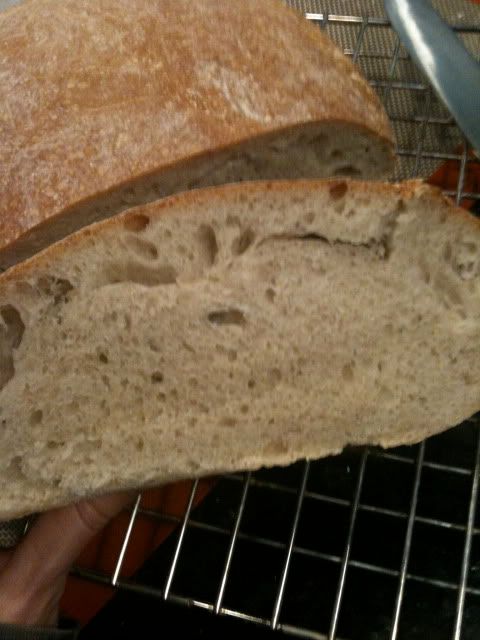
I followed Bridegtone's tutorial fairly closely. I didn't get deep enough slashes though and ended up with some air pockets. I'll fix that with the next loaf though. My starter is the San Fran from Sourdo.com. I thought this loaf had great flavor and texture and a really terrific crust.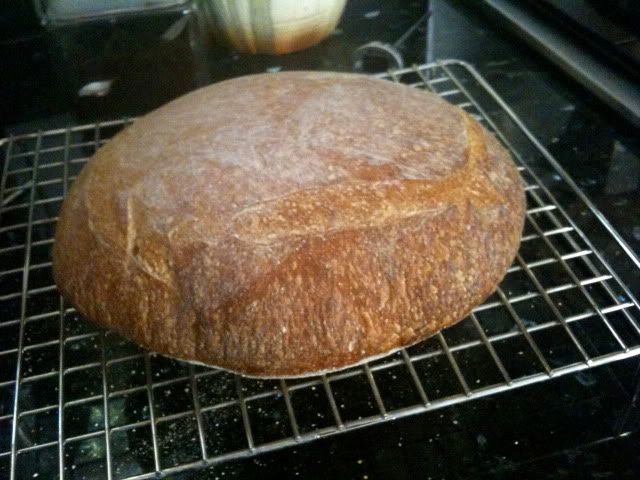
-
-
-
Post #63 - November 1st, 2009, 10:54 pmBill/SFNM wrote:Once the new culture stabilizes, you will probably note that the flavor contributed by the starter has more to do with how frequently it is fed. Feed (and use!) it often for best flavor.
I always think that sourdough is like keeping a pet.
-
-
Post #64 - January 3rd, 2010, 10:20 pmLTH bread-bakers,
I have begun a winter project of (at least) one bread recipe per week, every week until the ground thaws or I learn something.
I am primarily working out of Bernard Clayton's New Complete Book of Breads, mainly because that's what I had gotten as a gift some years ago.
I have a stone, a thermapen, a standing mixer, and a steady supply of yeast. I am on bread #5 and have been generally happy with the results so far.
My question for those who bake bread regularly: do you use a couche or banneton with any regularity? Do you approximate these items as Bridgestone does above? Or do you just do your final rise in a bowl or on the baking sheet?
I'm thinking about buying some bannetons at the San Francisco Baking Institute (well regarded on TheFreshLoaf, the profits go towards scholarships to the institute) but I'm wondering what, if any, experience people have had with banneton-type products and how you think it has improved (or not) your bread. Ditto a couche..
Hopefully I will be more diligent and start documenting my weekly breads soon.
-
-
Post #65 - January 3rd, 2010, 11:51 pmI fake it like Bridgestone did, usually in my collander with a tea towel lightly dusted. I think you get a better shape that way, though of course, the main thing making sure you get a better shape is don't mix it so wet that it spreads and sags when it goes on the baking stone (or whatever).Watch Sky Full of Bacon, the Chicago food HD podcast!
New episode: Soil, Corn, Cows and Cheese
Watch the Reader's James Beard Award-winning Key Ingredient here.
-
-
-
Post #66 - January 4th, 2010, 8:24 amIf you are going to bake regularly, the banneton can be a good investment. I bought some from SFBI and posted about the experience here. Prior to that, I had used a pasta bowl draped with a towel and had good results, but these bowls were a bit too flat. The banneton is a bit better at keeping the boule in a round shape and promoting a rise upwards, rather than outwards.
There is nothing magical about the banneton, though. It just has a good shape. So if you have a basket that produces a shape that you are happy with, there isn't much need to buy the banneton. In one of my books - I don't remember which - the author says that stocking his bakery with real bannetons was quite expensive and so he just picked up a bunch of plain baskets at Cost Plus for a fraction of the cost.
Note that SFBI has both plain wicker baskets and linen tops as separates, and cheaper bannetons that have the linen top sewn in. I prefer the separates because they are slightly higher quality and also give me the option to use the basket without the linen.
I also bought a couche but I don't make baguettes regularly enough to say whether it works better than other methods.
By the way, I have an older edition of Clayton's book also, but for breads that use commercial yeast (i.e. not sourdough) I really prefer The Bread Baker's Apprentice by Peter Reinhardt. He is an instructor at Johnson and Wales and has a focus on techniques that I appreciate. The thread I linked to above has some other notes on books.
-
-
-
Post #67 - January 4th, 2010, 10:30 amgastro gnome wrote:I'm thinking about buying some bannetons at the San Francisco Baking Institute (well regarded on TheFreshLoaf, the profits go towards scholarships to the institute) but I'm wondering what, if any, experience people have had with banneton-type products and how you think it has improved (or not) your bread. Ditto a couche..
Bannetons also wick away moisture from the dough, which helps with crustiness and shape retention. Slashing the dough with patterns will also be easier because of the drier surface. Regular bowls won't let the proofing dough "breathe" even if you line it with cloth or dust it with flour.
SFBI is a good source and all of their bannetons are reasonably priced. The largest is especially useful for Poilane-style miches, which weigh about 4 pounds after baking.
I don't recommend the couche from SFBI, though. Go with the couche from King Arthur Flour, which is much stiffer and better at holding the shapes of your baguettes and ovals.
You should also consider a digital scale even if Clayton doesn't provide weight measurements. I think he weighs a cup of flour as 5 ounces each, which is significantly more compared with recipes from other authors. Most books go with 4.5 ounces per cup.
-
-
Post #68 - January 4th, 2010, 7:24 pmDarren72 wrote:If you are going to bake regularly, the banneton can be a good investment. I bought some from SFBI and posted about the experience here.
Darren, thanks for that link. It's helpful and I probably should have posted my query there.kanin wrote:SFBI is a good source and all of their bannetons are reasonably priced. The largest is especially useful for Poilane-style miches, which weigh about 4 pounds after baking.
kanin, I'm assuming you're talking about the wicker looking baskets rather than those that look like brotforms? The brotform lookalikes appear to only hold up to 2 lb dough.kanin wrote:I don't recommend the couche from SFBI, though. Go with the couche from King Arthur Flour, which is much stiffer and better at holding the shapes of your baguettes and ovals.
I was looking for a cheaper alternative and saw some unbleached muslin at Hancock Fabric. No matter the weight, they all seemed flimsy. This seems like a good suggestion. I also saw mention of using a canvas painter's drop cloth, which I assume would be heavier, but would probably just be too much fabric to work with for any potential cost savings.kanin wrote:You should also consider a digital scale even if Clayton doesn't provide weight measurements. I think he weighs a cup of flour as 5 ounces each, which is significantly more compared with recipes from other authors. Most books go with 4.5 ounces per cup.
I should have mentioned that I've got a digital scale, but haven't used it much because all Clayton's recipes are volume measurements. This is one of my issues with his book as everything I have been led to believe suggests that this is pretty inaccurate. Still, the breads have turned out OK, and it has made me "listen" to the bread more and try to develop a sense of whether I think it needs more or less flour to get to a desired consistency. So it's been good practice from that point of view.
I am also reading the opening chapter of Cookwise, the "Wonders of Risen Bread" which is really helping to explain some of the science to me. Although Corriher says she used 5.6 oz per cup as her standard conversion!
-
-
Post #69 - January 7th, 2010, 9:38 amYes it's the larger lined wicker baskets. It gets a lot of use because I'd rather bake one large loaf than several smaller ones.
I remember reading about asking for "raw canvas" when going to a fabric store for couches. Other types of canvas may be treated with something and won't be food safe.
-
-
Post #70 - February 10th, 2010, 11:04 pmSo my winter project continues unabated. At least one bread per week. I think I'm finally starting to understand a bit and have gotten some good results. I've found that Shirley Corriher's Cookwise was very valuable as has been Peter Reinhart's Bread Baker's Apprentice and Whole Grains cookbooks - not so much for the recipes as the explanations behind them.
I have found the delayed fermentation methods in Reinhart's Whole Grain book particularly amenable to busy mid-week baking. Much of the flavor gets a head start the day before baking with pre-doughs that sit out on the counter and in the fridge respectively. This cuts down the preparation time necessary on bake day. Dough can come out of the fridge and be baked in under 4 hours with no more than 15 or so minutes hands on time with it.
Bread #12 - Multigrain struan with millet, rolled oats, flax seeds, bulgur and a sesame seed top: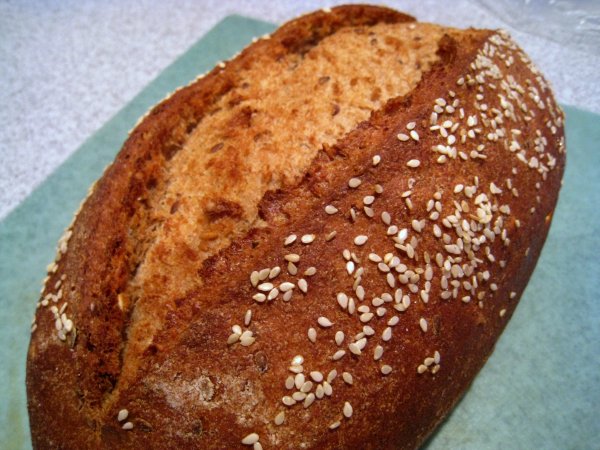
-
-
Post #71 - February 16th, 2010, 7:47 pmYesterday, I made a whole-wheat multigrain boule with black sesame seeds
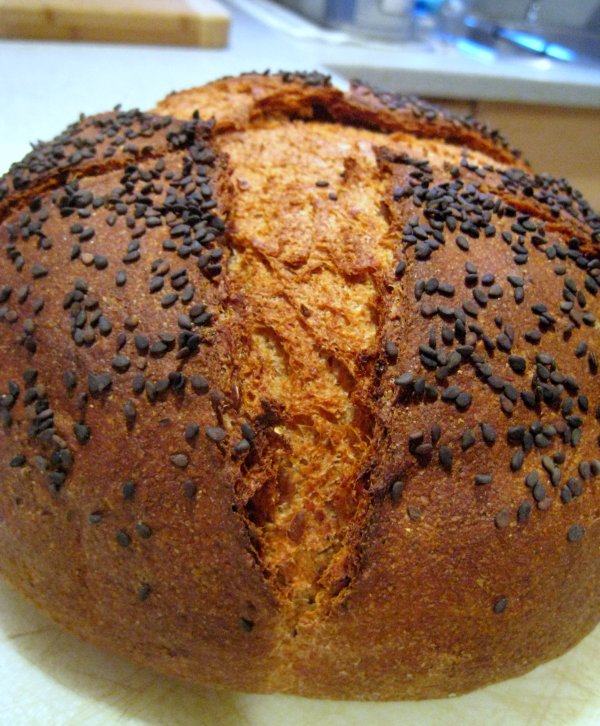
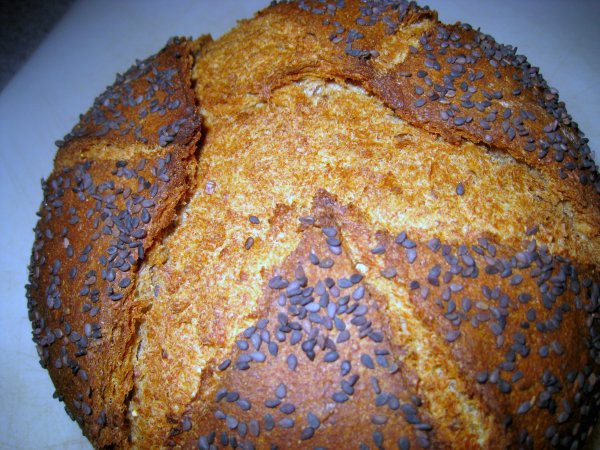
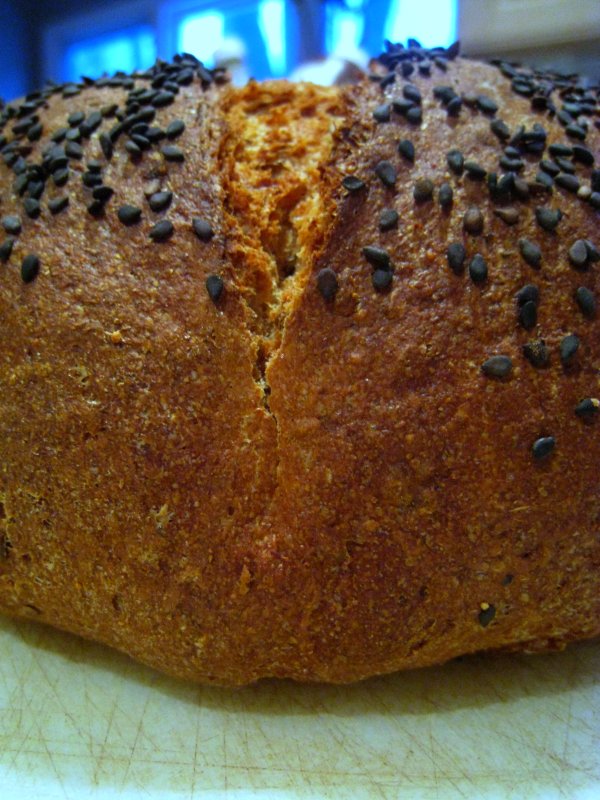
Something went a bit wrong with this loaf. Maybe there was a higher hydration to my precooked grains, but the soaker was a lot wetter than previous ones I have worked with. I had to add a lot of flour to get it to the right consistency.
I also misread directions and was baking at too low a temperature initially. That may have compromised some rise. Still, I cooked it till it thumped true and I'll be trying it shortly.
I've also found that these whole wheat breads have not toasted up as well as some I've gotten from the store. They have a drier texture. I will keep tweaking.
-
-
Post #72 - February 16th, 2010, 8:34 pmAnother thread I got behind on somehow! Those are some beautiful breads - I need to start branching out; I'm not having good success with the five-minutes-a-day bread like I did at the beginning, particularly with multi-grain breads.
-
-
-
Post #73 - February 22nd, 2010, 6:18 pmA nice large boule for a beautiful snowy day:

-
-
-
Post #74 - February 27th, 2010, 4:08 pmMore from a busy week of bread-making:
White sandwich loaf
Dough rising: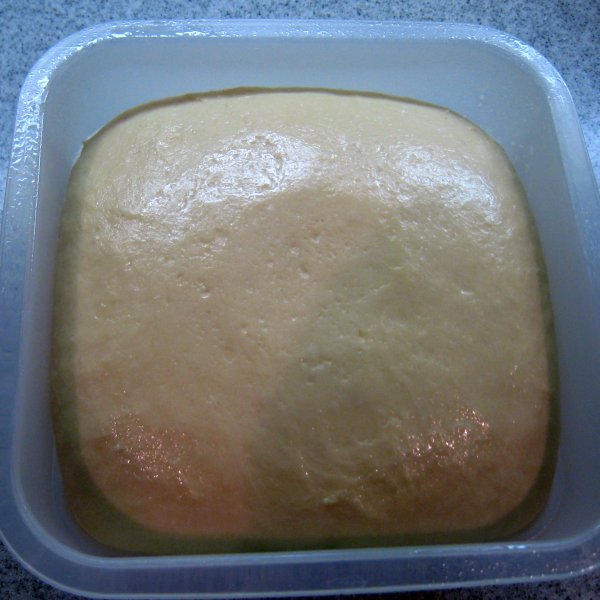
Risen dough: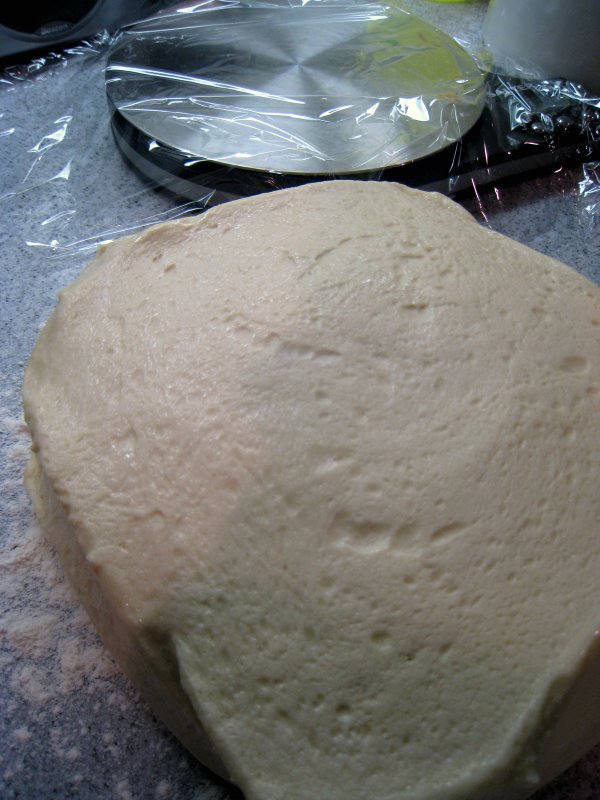
Portioned dough: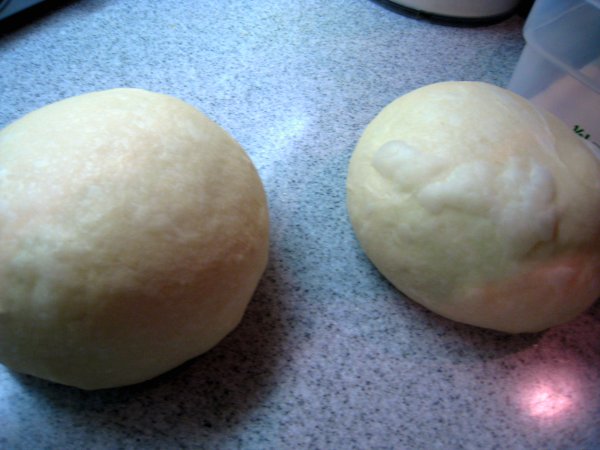
Finished loaves (some cracking on the top of one):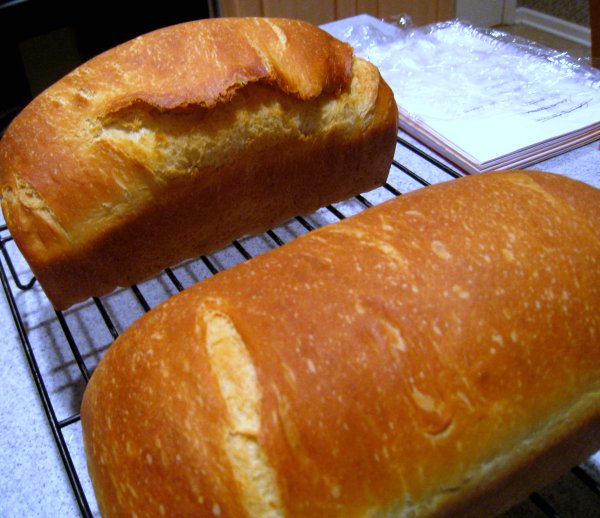
Interior: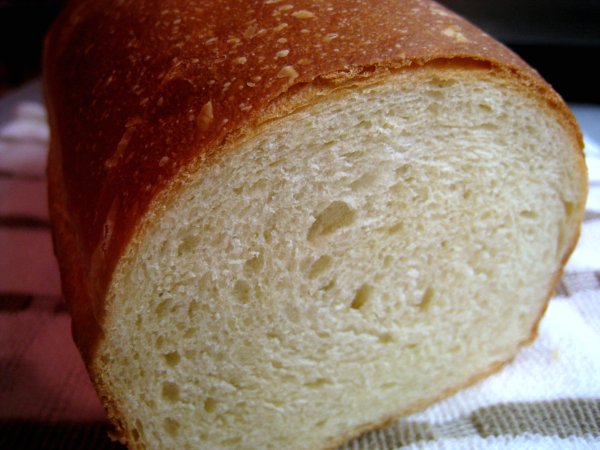
Whole wheat multi-grain boule (without any of that egg wash or fancy stuff)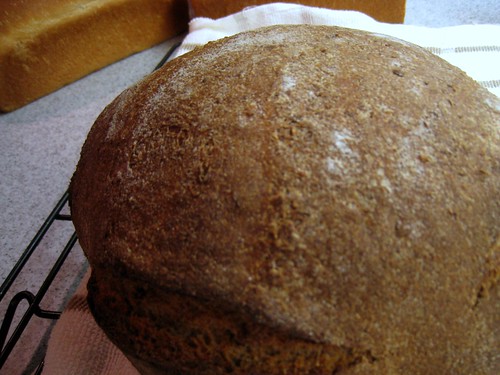
This is probably the wheatiest tasting bread I've made to date. I put in coarse corn meal which didn't really soften in the overnight soaker so there's a grittiness to the crumb I don't love. But that can be fixed the next time I make it.
Challah
Braided for bench proofing: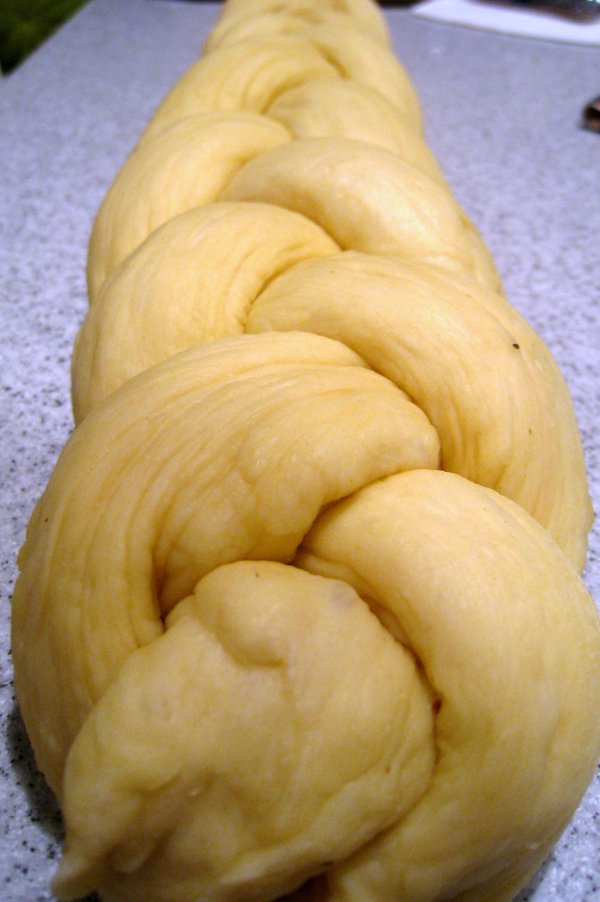
After proofing and topped:
Finished bread: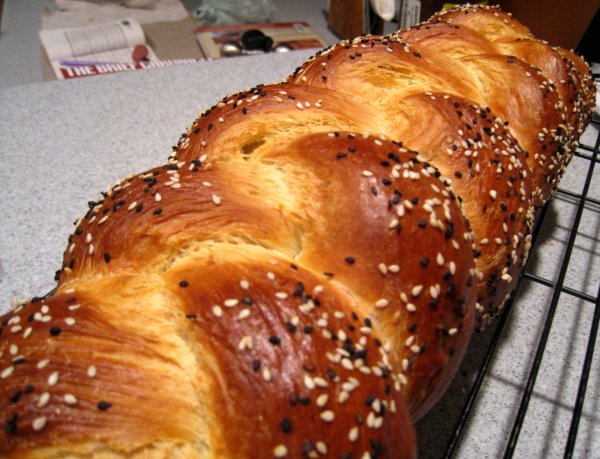
A large loaf: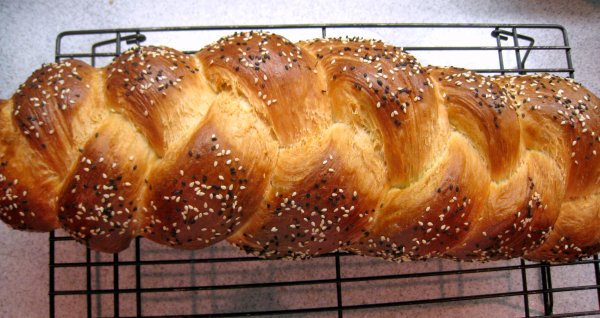
Because of the additions of egg and oil, this dough was extremely easy to work with. It was an all bread flour recipe, so forming gluten was fairly easy. The only tough part to this recipe was rolling out the three strands for braiding. Because of the high gluten content, the dough was not very extensible and sprang back to shape. I had to roll a bit and then let it rest a number of times until I had the length I was looking for. After that, though, the braiding and decoration was fairly simple. This was a crispier crust than I'm used to in challahs, but that was entirely welcome. I do think it might have been a little light on flavor, maybe some more salt. But overall, I was quite pleased. I will definitely make challah again.
-
-
Post #75 - February 27th, 2010, 5:03 pmgastro gnome, you are firing on all cylinders! Wow, great photos. When you open your bakery, I'll be the first in line! --Joy
-
-
-
Post #76 - March 1st, 2010, 1:17 pmI just wanted to add--I am really enjoying this thread. Gastro gnome, I think I'm going to have to copy (greatest form of flattery) your loaf a week idea. Is the challah recipe from Reinhart?
-
-
-
Post #77 - March 1st, 2010, 7:08 pmI just learned that I too am sort of flattering someone else. Although that challenge has been on since May so maybe we're operating at different paces (levels of obsessiveness). Then again, I'm not exactly maintaining a food blog on the side either.
But yes, thaiobsessed, the challah recipe is Reinhart's and makes great French toast from what I hear.
-
-
-
Post #78 - May 2nd, 2010, 4:56 pmTried a batch this weekend (a fusion of Bridgestone's recipe and Reinhart's sourdough--mostly Bridgestone's though)
I used about 450 grams bread flour, 450 grams whole wheat and 120 grams rye.
It tastes great (I'd still like a little more height on my boules though).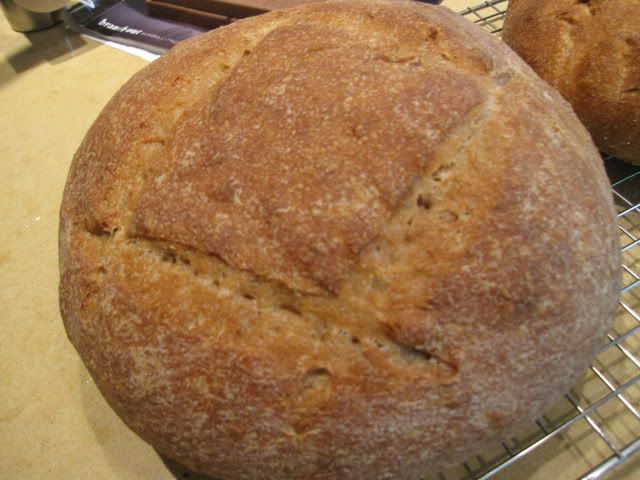
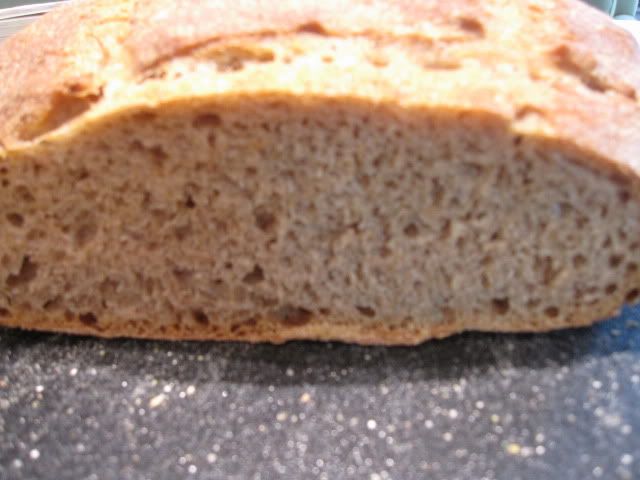
I tried one of Reinhart's fancy scissors cuts on the second loaf.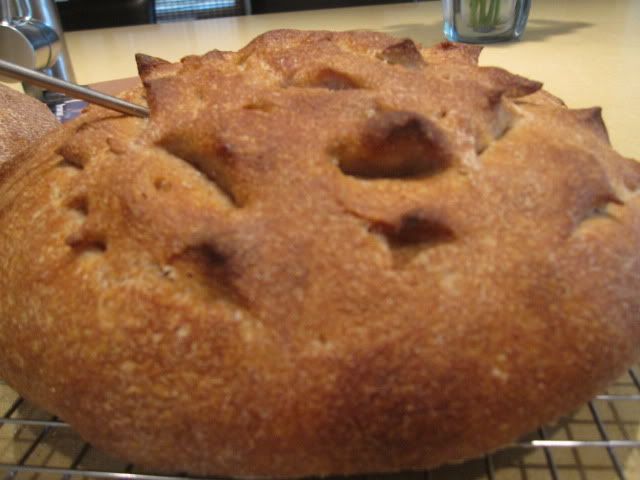
-
-
-
-
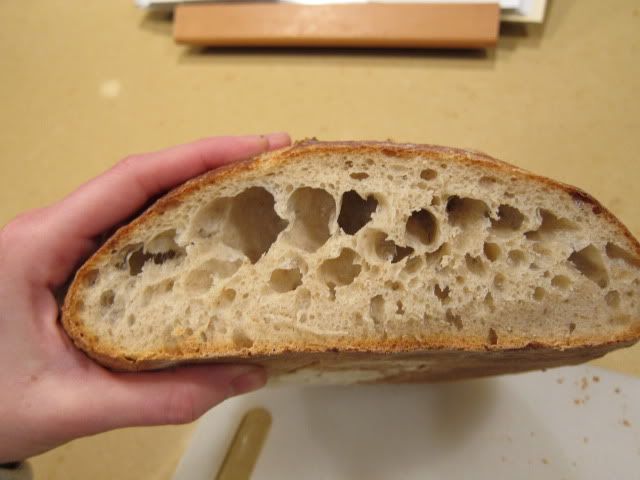
Post #79 - January 3rd, 2011, 4:04 pmThis month's Martha Stewart Living (the subscription was a gift, but I admit it, I renewed it) had a recipe for a country loaf from Tartine Bakery. I tried it a couple weeks ago and I was very happy with how it turned out. Unfortunately, I ran out of time to bake it and had to proof the formed loaves in the fridge for 24 hours and bake them the next day. They were a tiny bit overproofed but I was still pretty happy with how they turned out. The highlights of the recipe: wild yeast starter (I used the one in my fridge, tho the recipe included tips for making your own with whole wheat and bread flour)), making a leaven with 1 T of activated flour, 2 rises before forming the loaf, Initial brief mixing in the stand mixer, then folding during bulk fermentation, 3-4 hour rest period after forming the loaves.
I'm going to try this recipe again (but start earlier in the morning).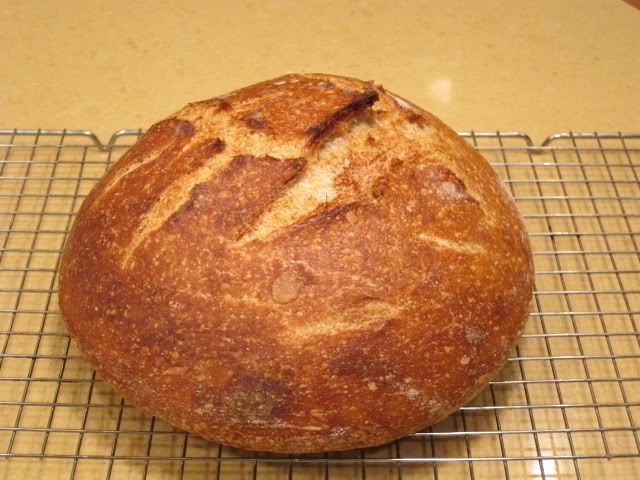
-
-
-
Post #80 - January 3rd, 2011, 10:12 pmLooks interesting. I will check the recipe out as I am just getting back into bread baking after taking many months off.
What is activated flour exactly?
And a 3-4 hour rest prior to baking sounds like a big departure from most normal recipes. Did the article indicate what the bakery was trying to achieve with so long a rest?
-
-
-
Post #81 - January 4th, 2011, 6:14 amgastro gnome wrote:What is activated flour exactly?
A typo. It should read activated starter.gastro gnome wrote:Did the article indicate what the bakery was trying to achieve with so long a rest?
I'm not sure. The bread was very hole-y which is how the pictures looked too, though some of that may have been because of the prolonged proofing in the fridge.
-
-
-
Post #82 - January 4th, 2011, 9:00 amAnd a 3-4 hour rest prior to baking sounds like a big departure from most normal recipes. Did the article indicate what the bakery was trying to achieve with so long a rest?
I received the book that this recipe is drawn from for Christmas (Tartine Bread). I have only quickly flipped through it, but the concept is for the home baker to make breads similar to those the bakery produces. It does mention that they proof at relatively high temperatures (high 80's ) in the bakery that most of us can only get to in the summer. They suggest extending the proofing time if your home is at a lower temperature, and 3-4 hours sounds about what they would receommend if your kitchen is in the 60's. Probably more info in the book but I haven't gotten to it yet.
-
-
-
Post #83 - January 4th, 2011, 9:03 amWild yeast works slower than commercial yeast. So you need a longer rise. Longer rises also develop more flavor in the bread.
-
-
-
-
Post #84 - January 4th, 2011, 2:13 pmrickster wrote:And a 3-4 hour rest prior to baking sounds like a big departure from most normal recipes. Did the article indicate what the bakery was trying to achieve with so long a rest?
I received the book that this recipe is drawn from for Christmas (Tartine Bread). I have only quickly flipped through it, but the concept is for the home baker to make breads similar to those the bakery produces. It does mention that they proof at relatively high temperatures (high 80's ) in the bakery that most of us can only get to in the summer. They suggest extending the proofing time if your home is at a lower temperature, and 3-4 hours sounds about what they would receommend if your kitchen is in the 60's. Probably more info in the book but I haven't gotten to it yet.
I've been making the Tartine bread a few times a week for the past few months. It is amazing bread and seems to get better with each batch. I have been bulk fermenting at 70F for 4-6 hours then placing it in the fridge overnight, then shaping and proofing for a few more hours at 70F. Precision in the timing and temperatures for this bread are not nearly as critical as the manual handling to create the proper gluten structure and surface tension.
-
-
-
Post #85 - January 8th, 2011, 4:54 pmCould one of the regulars on this site please describe to me how the Tartine breads (or any of the other boules) are better than the no-knead boule? I've been more than pleased with the no-knead approach to bread baking and am curious to hear what I'm missing.
-
-
-
Post #86 - February 6th, 2011, 7:52 pmbsnprf wrote:Could one of the regulars on this site please describe to me how the Tartine breads (or any of the other boules) are better than the no-knead boule? I've been more than pleased with the no-knead approach to bread baking and am curious to hear what I'm missing.
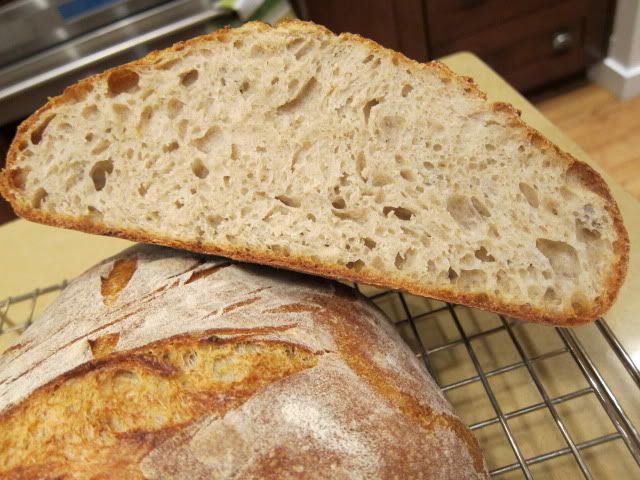
That's a complicated question bsnprf. I'm a bread-baking novice so you might want to wait for more detailed information from the experienced bakers on this forum. But...with my early forays into bread baking, I have noticed that small differences in timing, temperature, technique, proportions, etc. (ingredients to a lesser degree since all bread is basically flour, salt, yeast and water) make a huge difference in the final product. This leads to both the beauty and frustration of baking bread. I outlined the technique for the Tartine bread above but I'll highlight the major differences: levain, wild yeast (starter), folding, longer proofing.
I'm trying to be a little more disciplined about baking bread (by following gastro gnome's lead and going through Reinhart's BBA above) but I keep coming back to the Tartine recipe.Bill/SFNM wrote:It is amazing bread and seems to get better with each batch.
Agreed. I think this is my new favorite bread.
Tartine bread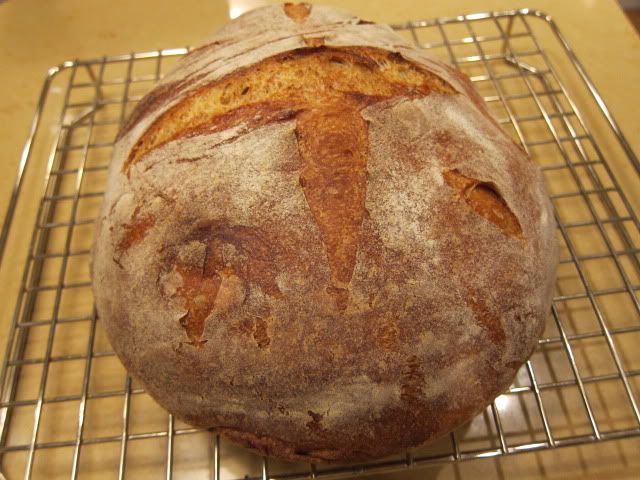
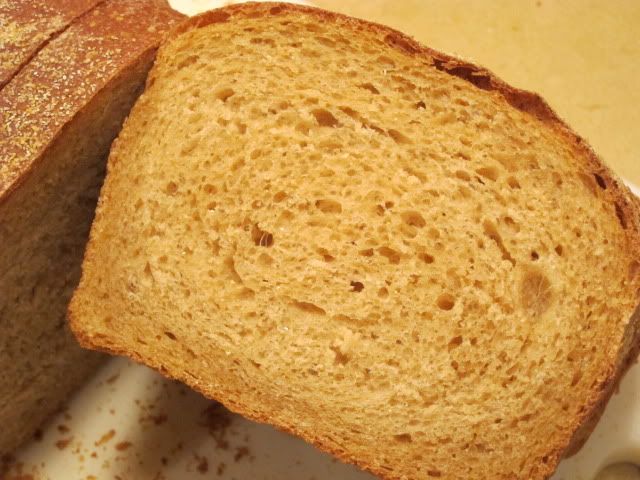
Anadama bread (from Reinhart's BBA--made with cornmeal and molasses).
I liked the texture and this makes a good sandwich bread but I'm not sure I like the sweetness with the molasses.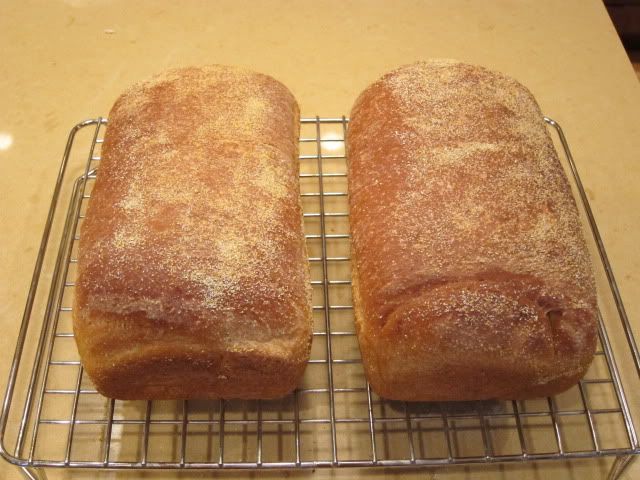
-
-
-
-
Post #87 - February 6th, 2011, 9:05 pmI'm better with a camera than with dough..

NYT no knead bread 50% whole wheat, 25% bread flour,& 25% white wheat flour
But I'm learning. Only problem in baking this loaf was that the lower gas burner in
my oven died as the oven was preheating so I could not get the over over 325˚
the loaf took about 50% longer and kind of got wider than I wanted. Tasted good but the
slices do not fit in the toaster!
-
-
-
Post #88 - February 6th, 2011, 10:53 pmLooking good, thaiobsessed. I will have to give the Tartine bread a try (when I can plan ahead for the long rises).
I've baked 4 bread recipes in the last 10 days as I'm trying out a few things. One of them called for the final dough to be placed in a bowl/banneton for an overnight rest. I did my standard hacking of putting a couche/kitchen cloth in a colander. When I took the bread out, the top of the bread (the side that was facing down in the colander) was quite dry - only the center was still moist. For whatever reason the bottom of the loaf (the side facing up in the colander) was still moist. I found that this impacted the oven spring as only the moist parts really rose much. The dry ring around the top had the crust harden too quickly to get much rise. This led to an odd island of risen dough in the very center of the finished bread.
I know some people suggested that a colander or banneton was better than a bowl because the dough could actually breathe. In this case, it seems to have had too much breathing because it dried out. Is there a happy medium, or do I really want the whole top crust to be drier?
Mhill, what kind of vessel are you using to bake your oblong no-knead breads? Is it an oval dutch oven?
I actually burned my first loaf today. I must have gotten my stone rip-roaring hot. I pre-heated the oven to 550 rather than 500 and put the stone on the floor of the oven rather than on one of the shelves. Within 10 minutes, the bottom of my crust was scorched and sticking to the stone. The crust also formed too quickly and impacted oven spring. I don't know if the 50 degree difference was really the issue, but clearly the stone got too hot. Can putting the stone on the floor of the oven make such a big difference in temperature?
-
-
-
Post #89 - February 6th, 2011, 11:01 pmgastro gnome wrote:Mhill, what kind of vessel are you using to bake your oblong no-knead breads? Is it an oval dutch oven?
it's round and the loaf just barely fits
-
-
-
-
Post #90 - February 7th, 2011, 6:58 amgastro gnome wrote:I actually burned my first loaf today. I must have gotten my stone rip-roaring hot. I pre-heated the oven to 550 rather than 500 and put the stone on the floor of the oven rather than on one of the shelves. Within 10 minutes, the bottom of my crust was scorched and sticking to the stone. The crust also formed too quickly and impacted oven spring. I don't know if the 50 degree difference was really the issue, but clearly the stone got too hot. Can putting the stone on the floor of the oven make such a big difference in temperature?
Scorching can have more to with ingredients than stone temp. Do you have any browning agents such as sugar or honey or milk in the dough? Also, the type of flour and the fermentation regimen play a role in the amount of natural sugars left in the dough after proofing.
I routinely bake on a stone or bricks at 550F-650F, but those doughs have no browning agents. For sweet breads like challah, I either avoid baking on the stone, or use a parchment barrier, or move the loaf to a grid after the crust has set. The benefit of the stone is in the early stages of baking when the bread needs the high heat transfer for good oven spring.
-


