

Lard Rendering (Lots of Pic's)
Lard Rendering (Lots of Pic's)
-
-
-
-
-
Lard Rendering (Lots of Pic's)
-
-
Post #1 - January 21st, 2013, 8:18 amWe finally got around to rendering lard yesterday afternoon. It wasn't the nicest day to be outside, but it needed to be done and it wasn't raining. The 20 degree temp wasn't so bad, but the 20 mph wind left alot to be desired.
Anyhoo, off we go........
We didn't get home from church until 1 so we were getting a late start, we had to sell sausage after mass, but that's another story. First on the agenda was a big fire so we could get a nice bed of coals for some steady heat.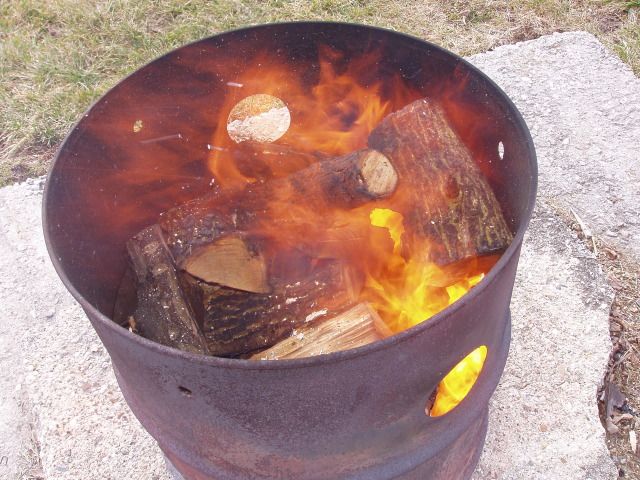
We ate a quick dinner and while the fire was still being stoked, we started cutting the leaf fat into even sized pieces.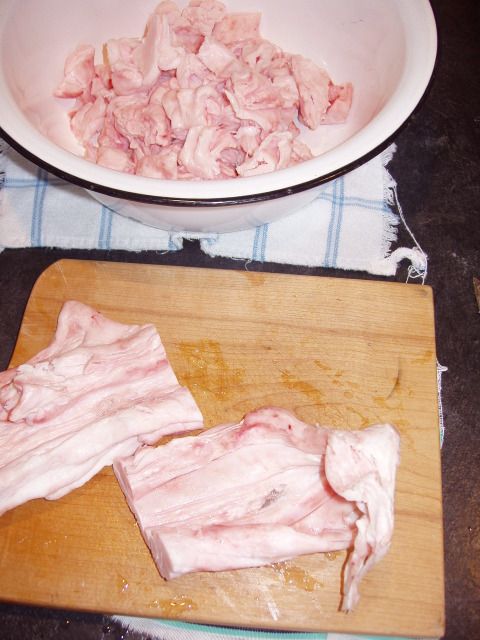
Around 3 o'clock, we finally got the kettle on the fire and the fat in the kettle. We added about 1 1/2 gallons of water so it could get hot without sticking........ the stirring begins.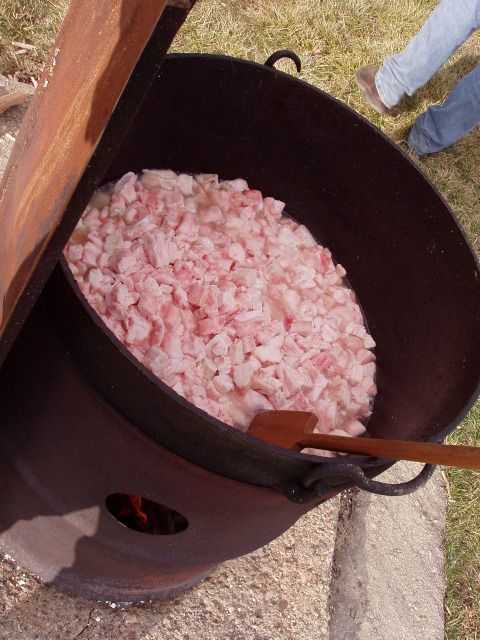
All the water that's added, plus what is in the fat tissue must be evaporated off, so the amount you pour in when starting is kind of done by experience, you don't want to stand around waiting for excess water turn to steam. It takes long enough as it is.
For the next hour and a half, you pretty much just babysit a steaming kettle, stirring it to get a nice even heating.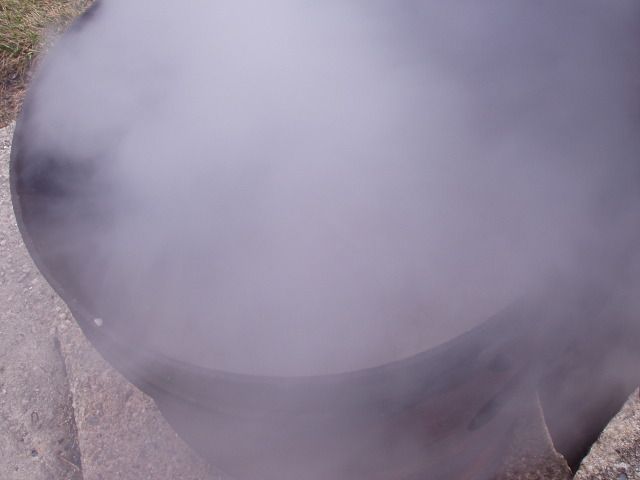
After an hour, the steam starts to get less, and it's easier to see what's going on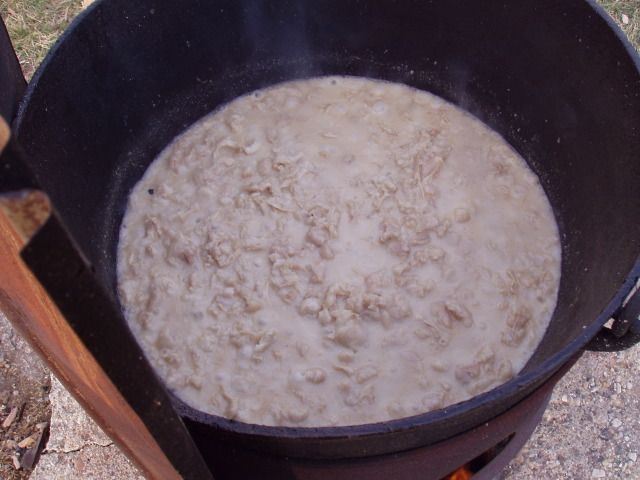
A little later, the steam is almost gone, this is when you really beging to see progress in the rendering.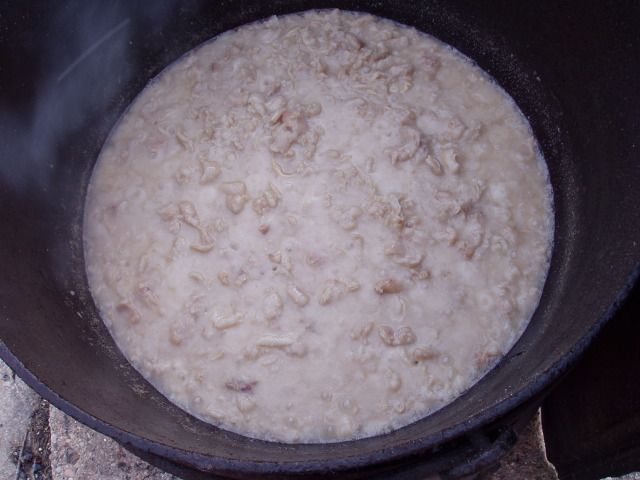
After another half hour, the liquid is getting clear and the fat tissue is starting to brown. The bubbles are getting smaller and the steam has pretty much disappeared.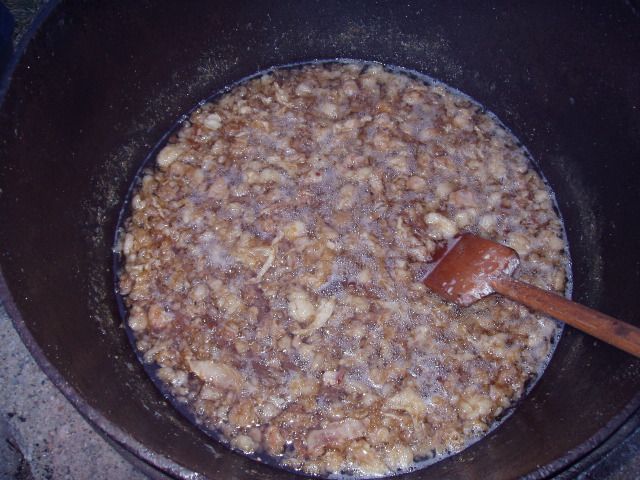
about 20 minutes later, the steam is gone, the fat is cooked and the bubbles are nice and even and tiny.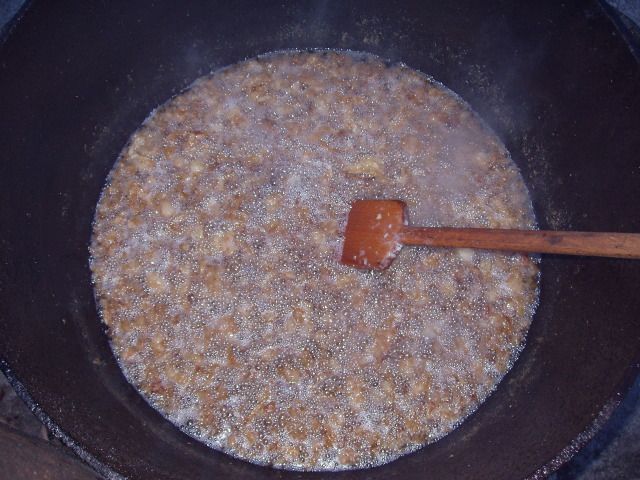
Time to get the kettle off the fire. This is kind of a learned thing too. The kettle holds alot of heat and continues to cook for quite some time after it's off the heat. You have to allow 10 or 15 minutes extra time to get done.
We usually, do the next steps outside, but it was so cold yesterday, we carried the kettle into the garage, so we could get out of the wind........ did I mention it was cold and windy??
I'm going to post this so it doesn't get lost in cyberspace. I'll be right back with part two.....
-
-
-
-
Post #2 - January 21st, 2013, 8:43 amOK, part two......
The kettle is in the garage and the straining begins. We use a fry basket to remove most of the fat/cracklins from the kettle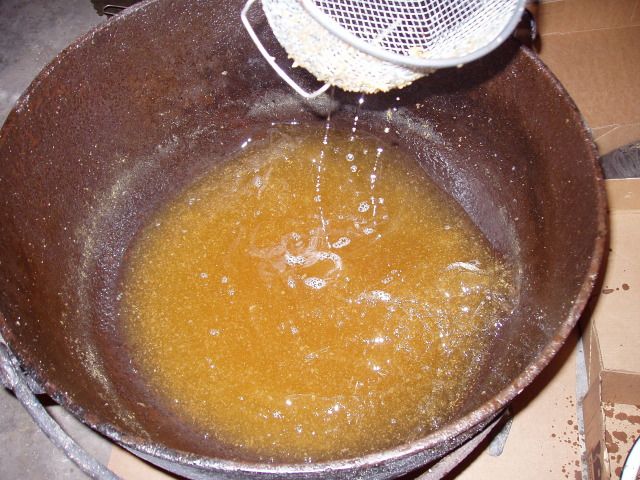
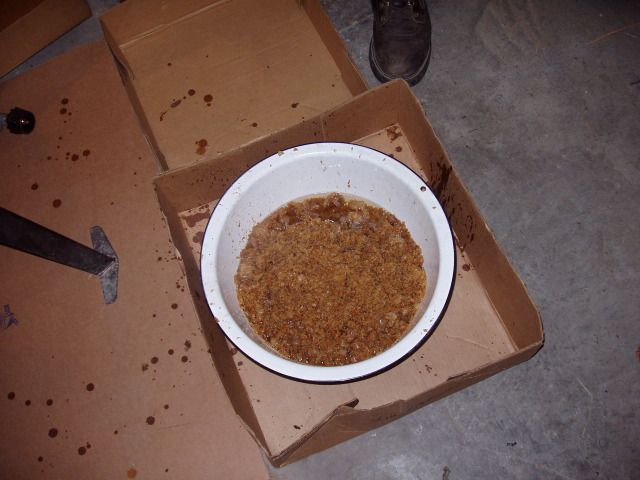
The next step is to press the fat chunks and get all the oil out. In the old days, a sausage press was used to squeeze the fat. Since we don't have one, we us an old metal potato ricer. It takes longer, but it does the job.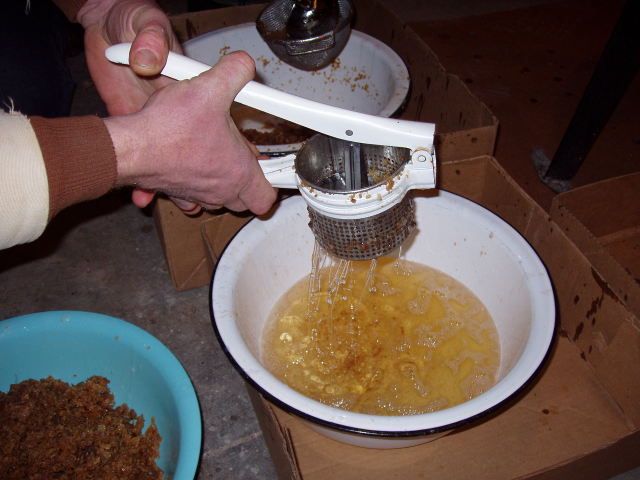
We are now down to two pans of liquid gold.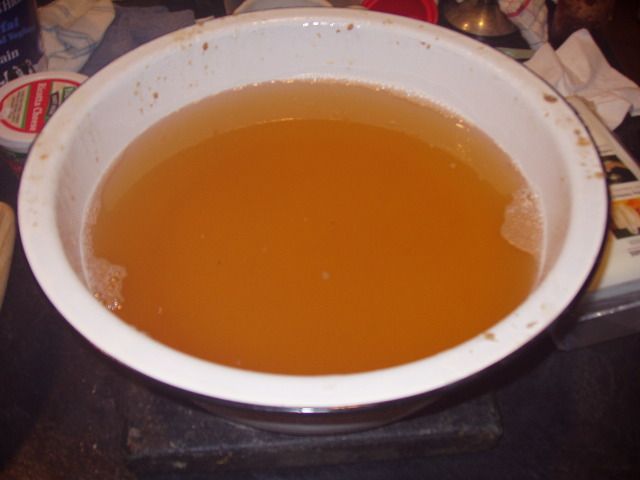
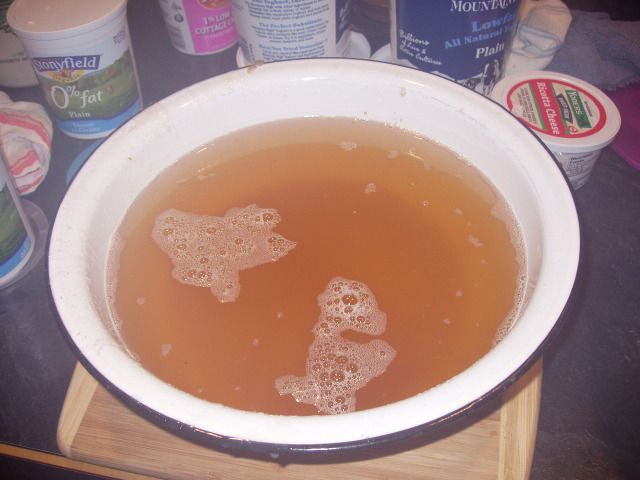
Also, a pan of cracklins. This is all the solids that are left from the fat you started with.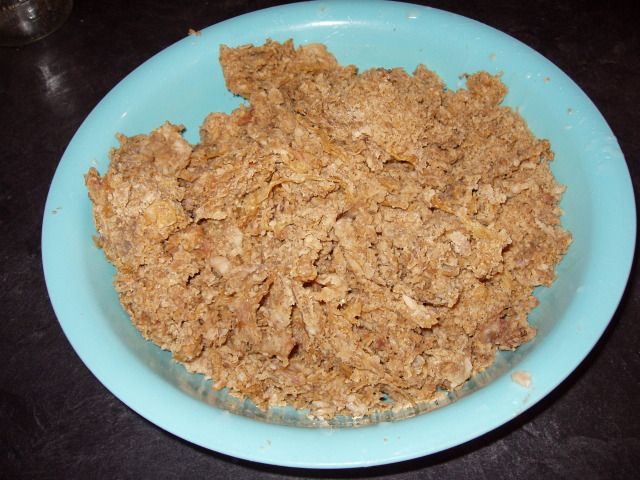
No pictures of the next step, but we strained all the liquid through cheese cloth, into the waiting containers.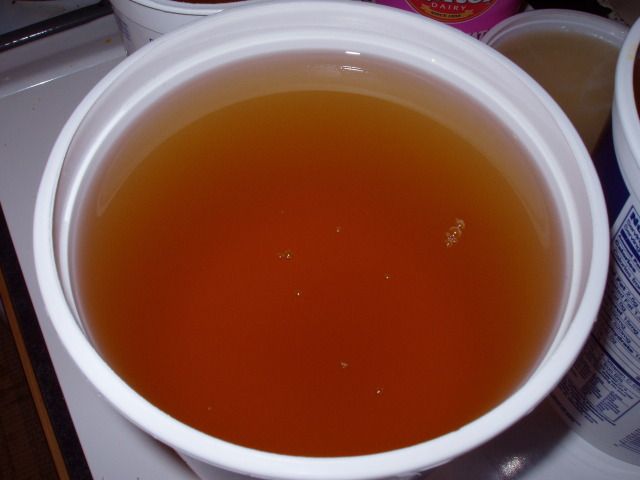
We ended up with 12 or 13 pounds of finished lard. I think we sat down about 7:30 last night, after getting all the fat covered pans and utensils washed. A quick supper and a tall cold brewskie(s), followed by a hot shower, and I hardly remember even crawling into bed.
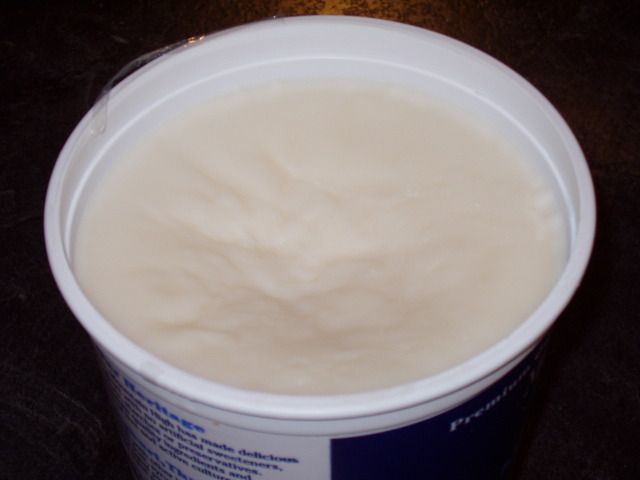
This morning after cooling, the good old familiar white, solid lard
Well, that took almost as long to write about as it did to do the actual job.....
Thanks for following along.
Tim
-
-
-
Post #3 - January 21st, 2013, 8:53 amGreat post - thanks for sharing. I've rendered small batches of lard on the stovetop, but never endeavored such a large-scale operation (though the idea of the house not smelling like lard for a week is appealing!).
-Dan
-
-
-
Post #4 - January 21st, 2013, 8:58 amYes, excellent posts. Thanks!
-
-
-
Post #5 - January 21st, 2013, 9:50 amHi,
Roughly how much lard did it weigh before processing to yield 12-13 pounds?
The most I have rendered was about 16 pounds from Hammond's mulefoot pig. I concur with dansch's experience of the porcine aroma lingering in the house. I did't weigh the final output, though I had several quarts of rendered lard.
Will you use all this lard yourself?
Regards,Cathy2
"You'll be remembered long after you're dead if you make good gravy, mashed potatoes and biscuits." -- Nathalie Dupree
Facebook, Twitter, Greater Midwest Foodways, Road Food 2012: Podcast
-
-
Post #6 - January 21st, 2013, 9:55 amWhat Cathy is trying to say is: Can anyone get their hands on some of this lard?

-
-
Post #7 - January 21st, 2013, 10:03 amI'd be more interested in the cracklins.

When I smoke butts for pulled pork, I separate out what fat I can as I pull it. I then render it for lard with a nice smoky flavor. I don't think it would be good for pie crust, but it works well for a lot of other things. I need to remember the potato ricer thing.
-
-
-
Post #8 - January 21st, 2013, 10:37 amCathy2 wrote:Roughly how much lard did it weigh before processing to yield 12-13 pounds?
Will you use all this lard yourself?
That's a question I can't answer......... We had three dish pans full of cut leaf, we ended up with two of the pans full of lard and one half full of cracklins. I'm going to guess we started with about 25 lbs of fat. I'll weight it next time before we start. I just never thought about it before.
My wife's mom and aunt's are all bakers of the first order. Her mom makes the best pie crusts in the world and her aunts crank out pastries you would kill for. They take alot of what we make.
We offer our customers the chance to come and help make lard in return some of the finished product, but very few of them take us up on it. We've had a few come and help and go home without any, they just wanted to see what it was like.
We usually feed the cracklins to the barn cats when it's bitter cold, for some extra energy. The chickens get the rest in small quantities every day or two, through the winter, when they aren't finding anything good to eat in the yard.
-
-
-
Post #9 - January 21st, 2013, 11:31 amAre the pictures visible to everyone except me ?Would love to see the process
-
-
Post #10 - January 21st, 2013, 11:33 am
Bet those are some good tasting chickens! Terrific post.Freezer Pig wrote:The chickens get the rest in small quantities every day or two, through the winter, when they aren't finding anything good to eat in the yard.
-
-
Post #11 - January 21st, 2013, 12:39 pmwow that is a lot of work. Regarding the smell...I am wondering if its a pleasant smell somewhat like pork roasting or bacon frying or something more unpleasant.
Also wondering if the lard is basically tasteless like you get in the store or if it has a slight porky aroma to it.Toria
"I like this place and willingly could waste my time in it" - As You Like It,
W. Shakespeare
-
-
-
Post #12 - January 21st, 2013, 12:39 pmIf you want help next time, post here and I'd bet you get an extra hand or three.
As always, love feeling like we're in the room with you and the 25 steaming pounds of piggy!"Knowledge is knowing a tomato is a fruit; wisdom is not putting it in a fruit salad." Miles Kington
-
-
-
Post #13 - January 21st, 2013, 12:46 pmYour posts have been very interesting, thank you!
-
-
Post #14 - January 21st, 2013, 1:04 pmbeelewis wrote:Are the pictures visible to everyone except me ?Would love to see the process
It may be your software is blocking these images or they are very slowly downloading. I wish I could offer you more advice.
Regards,Cathy2
"You'll be remembered long after you're dead if you make good gravy, mashed potatoes and biscuits." -- Nathalie Dupree
Facebook, Twitter, Greater Midwest Foodways, Road Food 2012: Podcast
-
-
Post #15 - January 21st, 2013, 1:28 pmThanks Cathy.....I am at work( yeah, on the holiday, no time and a half) and the pic just don't display. It is a sort of hit and miss thing with pictures showing up. I checked on my phone, and the pics are there in all their glory.......
I just picked up some perch and catfish to go with my red beans and rice tonight. I WISH is could fry my fish in some of that Liquid gold. Great post !
-
-
-
Post #16 - January 21st, 2013, 2:08 pmSince you're at work, it's possible that your company's firewall is blocking the pictures.Steve Z.
“Only the pure in heart can make a good soup.”
― Ludwig van Beethoven
-
-
-
Post #17 - January 21st, 2013, 3:26 pmGood question Steve. However, just jumping around threads, I was able to view pics in other threads(the thread on Elizabeth and also the chicken wing from McDonalds in the eating out section.) I can't figure it out, but thanks so much for checking. Happy eating and shopping
-
-
-
Post #18 - January 21st, 2013, 3:40 pmbeelewis wrote:Good question Steve. However, just jumping around threads, I was able to view pics in other threads(the thread on Elizabeth and also the chicken wing from McDonalds in the eating out section.) I can't figure it out, but thanks so much for checking. Happy eating and shopping
It all depends on where the person who posted the pictures is hosting them. My work also blocks certain image hosters (I can see the pictures above but certain news sites don't load because their pictures are all blocked).
-
-
-
-
Post #19 - January 21st, 2013, 10:58 pmtoria wrote:wow that is a lot of work. Regarding the smell...I am wondering if its a pleasant smell somewhat like pork roasting or bacon frying or something more unpleasant.
Also wondering if the lard is basically tasteless like you get in the store or if it has a slight porky aroma to it.
It's a full afternoon's work, but it's not really back breaking...... kind of dull actually, if you are standing around the kettle and not getting the Readers Digest condensed version.
As far as the smell, it's not really porky smelling, I don't know how to describe it.... it's not something you want to live with though. I guess it's kind of like the fish on your plate doesn't smell bad, but the cooking of fish isn't always a good thing. One of the reasons we like to do it outside is the moisture that's evaporated off doesn't need to be in the house, and I'm sure there is an oily residue that would add to the clean up.
Since we only use the leaf fat, the finished lard is pretty much tasteless/oderless. If we used the trim fat, it would have a slight porky flavor.boudreaulicious wrote:If you want help next time, post here and I'd bet you get an extra hand or three.
That cracks me up.... I sit here in the middle of a corn field thinking there would be fun things to do in Chicago, and people in Chicago would travel to the middle of a corn field to render lard. All joking aside, I think you would be pretty disappointed in the days events after the 3-4 hour drive to get here. I would guarantee the food would be good though.
Maybe we'll sell tickets next time.
Tim
-
-
-
Post #20 - January 22nd, 2013, 6:19 amGreat Post!
I envy your dedication.
For those of us that want some leaf lard and either aren't going to render themselves or can't get any of the Posters', contact Detrick's Country Market in Penn.
http://www.dietrichsmeats.com/storehours.htm
They still don't take credit cards but tell them how much leaf lard you want and they will tell you cost including shipping. Send them a check and your leaf lard appears! I have ordered a number of times over the years with no problems and the leaf lard is superb!
Miss the cracklins though!-Dick
-
-
-
Post #21 - January 22nd, 2013, 7:44 amTerrific posts and pics; thanks very much for sharing the process. As a newly converted user with a couple pounds in the freezer (bought, not made by moi), I really appreciate the lesson and the process. And I'd echo Jen's notion about volunteers. Yeah, it may be a quiet day, but enough hands stirring the pot (and enough, um, beverages) probably does away with the boredom.
Gypsy Boy
"I am not a glutton--I am an explorer of food." (Erma Bombeck)
-
-
-
-
Post #22 - January 22nd, 2013, 8:16 amFreezer Pig wrote:boudreaulicious wrote:If you want help next time, post here and I'd bet you get an extra hand or three.
That cracks me up.... I sit here in the middle of a corn field thinking there would be fun things to do in Chicago, and people in Chicago would travel to the middle of a corn field to render lard. All joking aside, I think you would be pretty disappointed in the days events after the 3-4 hour drive to get here. I would guarantee the food would be good though.
Maybe we'll sell tickets next time.
Tim
Thanks for sharing the process! It's not even good food - just the promise of good food (hey, sometimes even just smells) that is a lot of fun.
Cheers!
-
-
-
Post #23 - January 22nd, 2013, 10:19 amSo...the lard has had a couple of days to sit, what it is being used to cook this week ?......will it be used in any sweet or savory dishes for any super bowl celebrations ?
-
-
-
Post #24 - January 22nd, 2013, 10:53 ambeelewis wrote:......will it be used in any sweet or savory dishes for any super bowl celebrations ?
We aren't really football people. We usually spend Super Bowl Sunday trying to avoid the game and the hype.
We do have a huge Ash tree in the back barnyard that was killed by the Emerald Ash Borer. Since winter is finally here and the ground is frozen, we are cutting it down Saturday. We have a couple of friends coming to help. We will feed them a big supper when we're done. I'm thinking there will be a couple of home made pies on the table.
Usually, it's just the two of us around here, so we don't go too crazy on deserts. If it's here, we'll eat it, so we try not to have it here too often...... if you know what I mean.
Other than that, the lard will go in the freezer and be used here and there as we need it.
Tim
-
-
-
Post #25 - January 27th, 2013, 12:14 amI was interested to read in "Mary at the Farm," a 1915 book about Pennsylvania Dutch farm cooking, about a different practice for rendering leaf lard. The book recommends simmering the fat with plenty of water and collecting the lard that rises and solidifies on top of the water after cooling. It's said to make the lard especially pure, odorless and white.
You wouldn't get the cracklings that way, but I suppose that you could drain the leftovers out of the water and then crisp them up.
-
-
-
Post #26 - January 27th, 2013, 1:51 pmLAZ wrote:I was interested to read in "Mary at the Farm," a 1915 book about Pennsylvania Dutch farm cooking, about a different practice for rendering leaf lard. The book recommends simmering the fat with plenty of water and collecting the lard that rises and solidifies on top of the water after cooling. It's said to make the lard especially pure, odorless and white.
You wouldn't get the cracklings that way, but I suppose that you could drain the leftovers out of the water and then crisp them up.
Pork griebenes?"Bass Trombone is the Lead Trumpet of the Deep."
Rick Hammett
-
-
-
-
Post #27 - January 28th, 2013, 10:54 pmLAZ wrote:......The book recommends simmering the fat with plenty of water and collecting the lard that rises and solidifies on top of the water after cooling. It's said to make the lard especially pure, odorless and white.......
Hmmmmmmmmmm....... I suspect Mary may have misinterpreted what she saw. I've never tried it, so I won't cry BS, but with that much water, the temperature won't get much above 212 F. I don't think you will really render lard at that low a temp. We add water to start breaking down the fat and heat it up without sticking, but the real rendering doesn't start until the water is boiled off and the fat temp comes up enough to boil the water out of the fat tissue.
I've been told by old timers, that they used to pour the rendered, drained fat into another kettle of boiling water to purify it. They would let it cool and the fat would float and harden, like you said. I don't think they actually did any rendering with that much water though.
A couple of layers of cheese cloth does a good enough job for us, I'm not dirtying up another pan just so my lard is one tint whiter than what we have.
I may be wrong, I have been before, but I'm guessing if that process works, it would take many more hours to get the job done...... it's a long enough day as it is.
Tim
-
-
-
Post #28 - January 29th, 2013, 12:34 pmGreat post, thanks. Looking at this, one can see how Mexicans with limited resources (i.e., kettle, fuel, refrigeration, time) would start adding the butchered meat and organs back in to the process to end up with carnitas. Love those big old copper kettles/casos.
Speaking of which, for readers looking for unprocessed lard, it's in just about every carniceria in Chicago - though often a shade or 2 more rustic than what F.P. acheived. Cermak Produce on North does a nice job, for example. They butcher a lot of pigs at that Mexi-Rican superstore.
-
-
-
Post #29 - February 19th, 2013, 10:10 ambeelewis wrote:.........what it is being used to cook this week ?......will it be used in any sweet or savory dishes ..............
OK, we finally used some lard for real cooking. We've been wanting to try to make pasties for years but never got around to it. Last Saturday we quit working outside earlier than usually and started cooking..... this was the result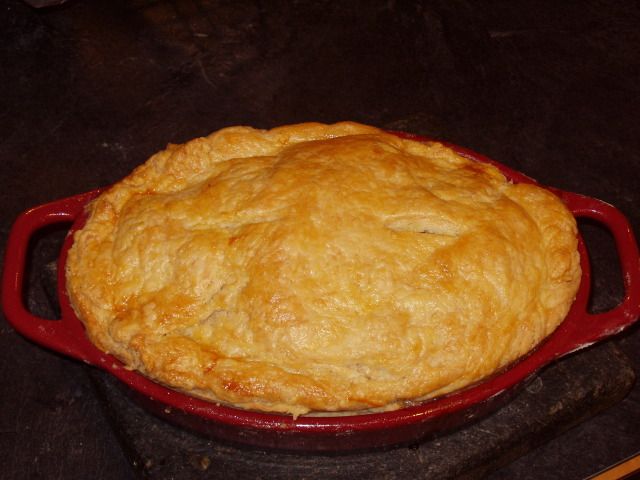
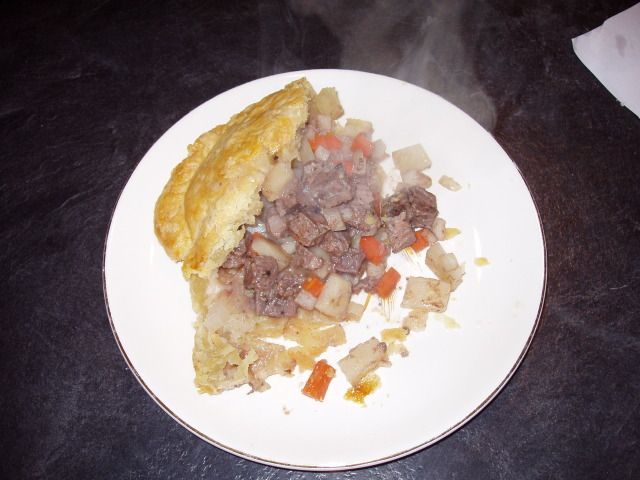
I know, it's not a real pasty because it's in a dish, but it has a top and bottom crust and didn't make a mess in the oven. It was very good for our first attempt. The crust was the perfect texture and flakiness.
We'll be doing this again, but it's not something you whip up for a quick meal.
Tim
-
-
-
-
Post #30 - December 2nd, 2013, 11:16 pmCathy2 wrote:......Roughly how much lard did it weigh before processing to yield......?
OK, quick follow up for Cathy2. We did another batch of lard Sunday afternoon. We started out with a little over 20 pounds of leaf fat, and we ended up with a little less than 15 pounds of rendered lard.
The weather was a little more enjoyable this time, we stood out, stirring the pot with just a hoodie on for warmth. A far cry from the wind chill we endured last year.
Tim
-