

Xiao Long Bao Recipe
Xiao Long Bao Recipe
-
-
-
-
-
Xiao Long Bao Recipe
-
Post #1 - August 3rd, 2006, 4:45 pmXiao long bao are labor intensive, but certainly not impossible to make. After a few thousand attempts, you might get somewhere close. My only experience with what I believe to be an authentic xiao long bao was at Din Tai Fung just outside Los Angeles. The wrappers, as PIGMON has described, were completely different than anything I’ve had before. Pliant, light, and paper thin—I thought it a small miracle that this ethereal sheath was holding in its liquid contents. The dough, from what I can gather, is made from a combination of simple yeast dough and hot water dough in equal parts. They are kneaded together to give the strength (hot water) and tenderness (yeast) needed to achieve the desired result.
So many of the recipes that I came across took the same short cuts that many restaurants in the US do. (Not surprising). They don't include a yeast risen dough--a true sin of omission. Also, many recipes call for the addition of agar-agar or gelatin to assist in ensuring your aspic sets up properly. I don’t think it’s necessary as long as you used enough bone/natural gelatin, making sure to reduce the stock until it is rich and flavorful.
Aspic
2 pork hock/feet, scrubbed
1 lb chicken wings
1 bunch of scallions
1 large finger of ginger
½ cup rice wine
Water to cover by an inch (about 8-10 cups)
Place all ingredients in a stock pot and quickly bring everything to boil. Skim, skim, skim. Lower heat to medium and simmer until the trotters are falling apart, skin is softened, and liquid has reduced by half. Strain all solids from stock, reserving pork skin. In a blender or a food processor, puree pork skin into 2 cups of stock. Process until liquid looks milky. Pour both pork skin juice and the rest of the stock into one bowl, let cool slightly, then place in the refrigerator to set.
It's amazing that this...
can turn into this:
The dough, for me, was an experiment. Here is the adapted recipe I used for it:
Part I: Yeast Dough (note—you will only use ¼ of this dough per recipe)
1 T. yeast
2 T. sugar
1 ¾ cup warm water
1 T baking powder
2 T shortening
6 cups high gluten flour
Dissolve sugar and yeast in warm water. Add one cup of flour and combine until smooth, let stand for 15 minutes to form a sponge.
Add the shortening and 4 more cups of flour (if mixing by hand you may want to gradually add flour, mixing/kneading as you go). Use as much of the remaining cup of flour needed to knead dough until it is very smooth and elastic. Cover while you make your hot water dough.
Part II: Hot Water Dough
2/3 cup all purpose flour
1/2 cup boiling water
Place the plain flour in a mixing bowl. In a small saucepan bring water to the boil. Add the flour and move the saucepan away from the flame, stirring the flour vigorously with a wooden spoon. Let dough cool a bit before kneading it together with ¼ of the yeast dough. (The rest of the yeast dough can be frozen, or if you plan to make a zillion baos you can quadruple the hot water dough recipe.) After dough is fully combined, put it in a large bowl and cover with a damp cloth. Set in warm place for 4 hours.
::
While your dough is rising, you can prepare the insides. The pork filling is fairly straightforward. The only surprise was the addition of ginger-scallion water:
6 scallions
8 inches of ginger
3/4 cup water
If you have a juicer, just juice the ingredients, and then combine with water. Otherwise, use a food processor to puree all ingredients, then strain. There is a debate as to whether the aspic and the meat filling should be mixed or kept separate. The advantage of keeping them separate is that you can control the amount of aspic that goes into each one, ensuring uniform juiciness. Mixing them together, would yield a less dense meatball filling--a preference for this result is merely a matter of taste.
Pork Filling
1 Lb of Ground Pork
3 Tsp Salt
6 Tsp Sugar
4 Tsp Soy Sauce
White Pepper
Ginger Scallion Water
1 Tsp Sesame Oil
*aspic
I did try it both ways, and if I were a better bun maker, and my bao were good enough to start talking about the finer details—*I would say that keeping the aspic and the meat filling separate is the way to go. Dice your aspic into smallish cubes like the picture above.
And in a separate bowl you can mix together the rest of the ingredients except the ginger-scallion water. After everything else is combined, add the ginger-scallion water gradually while stirring your meat with chopsticks in one direction. Keep adding the water until the filling takes on a paste-like consistency. Before you start to assemble your bao, though, I would fry off a bit of the filling to check for seasoning. You don’t want to come all this way, only to find out that your seasoning is off.
Ok, now that you have all of your ingredients prepared, you are ready for the fruitless hell that is xiao long bao construction.
Before you begin filling, make sure that you have the following:
Oil
Bamboo Steamer set up over boiling water
Carrot, sliced into thin discs (for steaming)
Ginger/black vinegar for dipping
Chinese Soup spoons and chopsticks
Rub a little oil on your work surface and rolling pin to deter sticking. (Don’t use flour like I did, or else your bun skins will be too pasty.) Divide your dough into 2 parts. Cover 1, and roll out the other into a log with a ¾ inch thickness. Cut log into 12 pieces. Roll each piece out into a 2 ½ inch disk. The edges should be much thinner than the center so that the seam doesn’t become overly thick when pleated. Place one teaspoon of the pork filling and 1 tsp size cube of aspic in the center of the dough, then starting at one edge, pleat dough around the filling. Then pinch the pleating together at the top to seal the bun.
Here is a picture of what it’s supposed to look like.
Place each bao on top of a carrot disc in the steamer, cover and steam for 7-8 minutes.
Wasn’t that easy?
I have to say that my first attempt was a bit of a failure in terms of the end product. The filling and soup tasted great, but the wrapper was lacking, and my pleating skills sucked! However I did learn a lot about the construction. The next time I make them, I will not spend so much time on the aspic and filling. I'll use boxed chicken stock and gelatin because I’m sure that the next time I make them, I will become 1% better at construction. Then maybe after the 8th time I make them I will be feel like making aspic from scratch will be worth it again. And maybe next time they will look pretty enough to post some pictures.
*trixie-pea*
-
-
Post #2 - August 3rd, 2006, 5:18 pmtwo xiao long bao posts at once: excellent!Being gauche rocks, stun the bourgeoisie
-
-
-
Post #3 - August 3rd, 2006, 5:38 pmTrixie,
Thanks for a fantastic post.
I have a question. Your procedure for the aspic calls for pureeing the cooked pork skins into two cups of stock. When I tried visualizing that in my mind, I saw the end result being a semi-liquid, semi-solid substance, yet in the picture, I see a pure, clear jellied stock. Did you strain the solids out of the puree of cooked pork skins?
Thanks again,

-
-
-
Post #4 - August 3rd, 2006, 5:45 pmEvil R,
I thought the same thing after reading through some recipes--but when I lifted the pork hocks out of the broth the skins were so soft that I thought I would give it a try. I'm glad I did. They puree into the warm stock like butter. I did pass the whole thing through a sieve at the end, but almost everything passed through without issue. The pork skin makes the aspic a bit cloudy, but certainly not chunky in any way.
trixie-pea
-
-
Post #5 - August 3rd, 2006, 7:58 pmtrixie-pea wrote:Xiao long bao are labor intensive, but certainly not impossible to make.
Trixie-Pea,
You give us all hope with your wonderfully instructive, and interesting, post.*
Thank you.
Enjoy,
Gary
Note to self, print Trixie-Pea's post and try to get to Carnegie Hall.
-
-
Post #6 - August 3rd, 2006, 10:22 pmHI,
Great post!
I have used the hot water dough (not sure of the proportions this moment) for making dumpling skins, doilies for Peking duck and scallion pancakes.
From watching ladies making dumplings in Chinatown, I have a tortilla press with the plates covered with plastic wrap. I will put a dough ball in there to press into a circle. I also have a small diameter roller about 8-inches long to finish it further if needed. If I use flour to keep the skins from sticking, then I use the absolute minimum. I also use a dab of water around the edges to be closed to help do the deed. Pinching is definitely a skill with a learning curve. I love watching the ladies at 7-Treasures fill and wrap shu mai in one hand!
When making doilies, the sesame oil used between the dough balls sort of squeezes out and keeps the rolling surface a stick-free zone. Unfortunately sesame oil might be a barrier in pinching close dumplings!
Looking forward to those pinched dumpling pictures whenever you're happy with the end result!
Regards,Cathy2
"You'll be remembered long after you're dead if you make good gravy, mashed potatoes and biscuits." -- Nathalie Dupree
Facebook, Twitter, Greater Midwest Foodways, Road Food 2012: Podcast
-
-
-
Post #7 - August 4th, 2006, 7:16 amWow!

Excellent post. Thanks for sharing!
Suzy" There is more stupidity than hydrogen in the universe, and it has a longer shelf life."
- Frank Zappa
-
-
-
Post #8 - August 4th, 2006, 9:10 amoooo.. a 2 pronged attack on the subject.
regarding the picture of how it should look like . i believe "wrong" method (shown in pink) reminds me the method used to wrap the regular dumplings...
-
-
Post #9 - August 4th, 2006, 9:15 amTonyC wrote:oooo.. a 2 pronged attack on the subject.
fancy...
-
-
Post #10 - August 4th, 2006, 10:49 amTrixie-pea,
Thank you for the excellent post. Somewhat coincidentally, I've been been looking into yeast doughs in certain noodle applications of late and have been planning to do a little experimentation in the lab as soon as time permits. Now I have a further project to try but also lots of inspiration.
AntoniusAlle Nerven exzitiert von dem gewürzten Wein -- Anwandlung von Todesahndungen -- Doppeltgänger --
- aus dem Tagebuch E.T.A. Hoffmanns, 6. Januar 1804.
________
Na sir is na seachain an cath.
-
-
Post #11 - December 19th, 2007, 8:16 amI’m one of many here who lament the lack of soup-y soup dumplings available in Chicago (a yen satisfied only by visits to New Green Bo in New York). trixie-pea’s DIY soup dumpling thread is/was a legendary LTH post for me—it really drove home the notion that, instead of sniveling about how you can’t find a decent (fill in the blank) in Chicago, you should learn how to make it yourself. So…I tried. (Full disclosure: By “I”, I mean “my mom.” She did 98 percent of the work, but I was by her side, drooling and encouraging her all the way.)
Our soup dumplings were no vision of authenticity. In fact, they were downright fugly. But for anyone else attempting it, the pictures I’m reluctantly posting are meant to be encouraging—yours’ probably won’t look this bad. On to the good part…
The recipe for the pork filling is nothing short of perfection. Looks-wise, I thought it might be bland or not scallion-y enough (the ones at New Green Bo have visible slices of scallion).
Pork filling
The vibrant ginger-scallion water is the secret.
Ginger Scallion Water
Here’s where we diverged from trixie-pea’s instruction: We made the pork aspic out of pork shoulder bones leftover from making sausage. It turned into a lovely, amber pork jelly. No problems there.
And, instead of making the yeast dough, we substituted Whole Foods pizza dough—reasoning that it’s basically the same stuff, and it’ll save a few steps. We (and again, by “we”, I mean “my mom”) mixed the hot water dough and the yeast dough in the proportion recommended by Trixie-pea. We’re not quite sure if it was the pizza dough, or the need for a better rolling pin (or a combination of factors), but our dumpling skins were kinda thick and dough-y.
Our dumpling-pleating skills weren’t so hot, either. The link to the pleating instructions were certainly helpful and interesting, but you need nimble fingers and a lot of patience—qualities I lack a thousand-fold. They turned out more like beggar’s purses. (I confess: The really deformed and lazy-looking “dumplings” are mine.)
Soup dumplings in progress
Plate of dumplings
All in all, the dumplings stood up to the steaming very well—we only had one or two blowouts. The problem was the soup. Instead of holding the delicious, melted pork aspic, the dumpling skin absorbed most of the soupiness. So the skins were kind of doughy and bloated. But the filling…oh, the filling. So tasty.
Dumplings steaming
While we were shopping for ingredients, I found these soup dumplings in the freezer section at the Richwell Market on Canal.
Richwell “Soup Dumplings”
I bought a pack just in case our experiment was a complete disaster. The nicest thing I can say about these dumplings is, they sorta look like real soup dumplings. Taste-wise? Blech. I’d take our funky-looking, delicious soup dumplings over store-bought any day.
I still have tons of aspic and filling left over, and I’m thinking of having another go at making soup dumplings. I’m not ambitious enough to try making the dough, so suggestions for types, brands and whereabouts of a good dumpling skin are welcome.
Thanks for the inspiration and instructions, trixie-pea!
-
-
-
Post #12 - June 13th, 2010, 12:49 pmSince the weather wasn't cooperating this weekend, I thought I'd make xiao long bao from Andrea Nguyen's dumpling cookbook. She doesn't used a yeast-risen dough (just a hot water/flour/canola oil wrapper) and she provides the 'short-cut' method for making the gelled soup. So, using her instructions, this was about a two hour project.
Step one: making the soup:
This was pretty easy. I boiled 1 1/3 cup chicken stock with 1 T+ chopped smoky ham from Paulina market, ginger and scallions, then cooled it a little, strained out the solids and added agar-agar (a seaweed derivative--Ms. Nguyen recommends Telephone brand from Thailand). After bringing this to a boil, you chill it to get it to set, then chop it and add to dumpling filling.
Stock prior to setting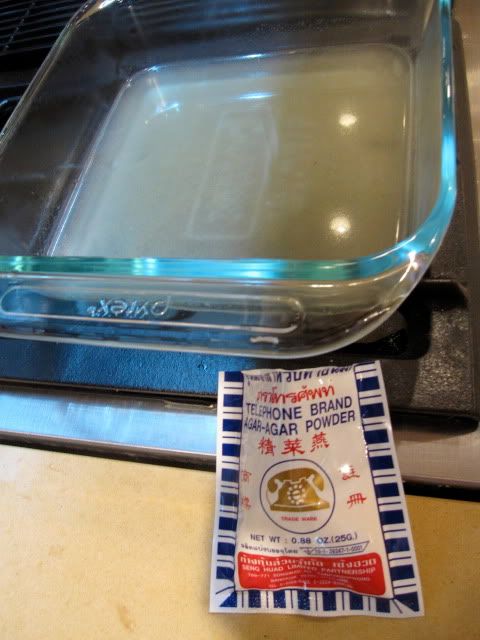
Chilled 'soup'
The dough is made from hot water, bread flour, AP flour and canola oil which can initially be mixed in the food processor, then needed until smooth and slightly elastic (a slight dimple should remain if you make an indentation with your finger). The dough rests for an hour, then you divide it, flatten it with a tortilla press (hmm...I'm guessing that's not 'authentic') and roll it out with a wooden dowel. A key feature of the wrappers is that they need a thicker 'belly' in the center so there is not too much dough when you pleat the dumplings and they don't break open. This turned out to be a little tougher than I thought. Otherwise though, rolling the dough and shaping the dumplings was pretty easy (though my dumplings could be a little more attractive). On Ms. Nguyen's website, she has some video demos which are helpful] and amazing/impressive.
Dumpling dough--lasting impression: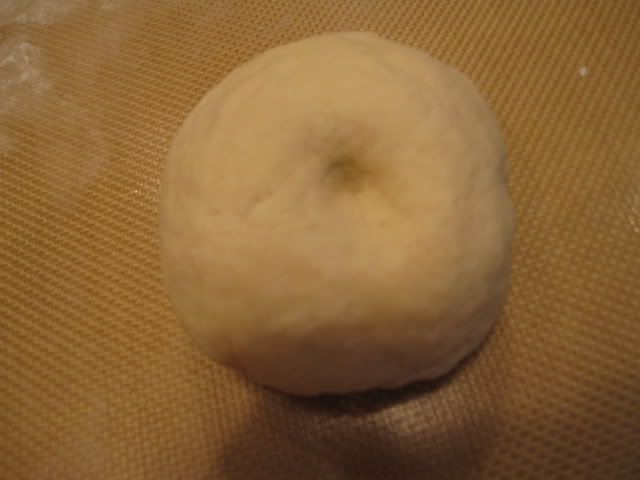
pressed wrapper: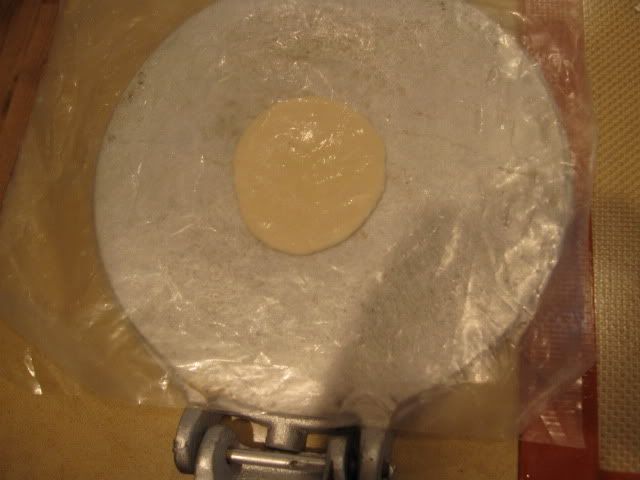
Rolled out wrapper: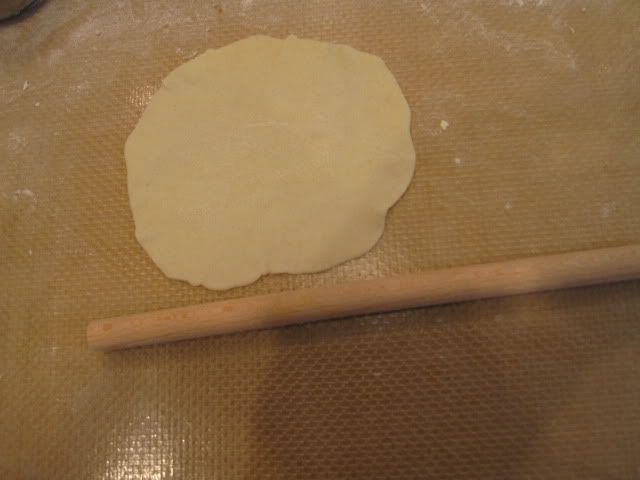
The filling is made of ground pork (not shown), scallions, ginger, white pepper, sugar, soy, rice wine and sesame oil: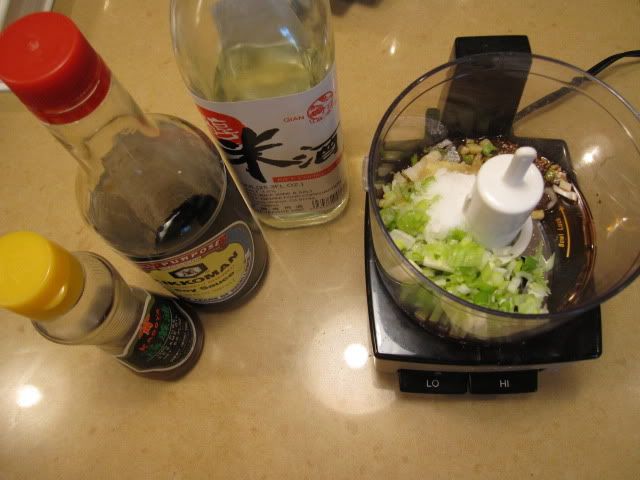
Dumplings ready to steam: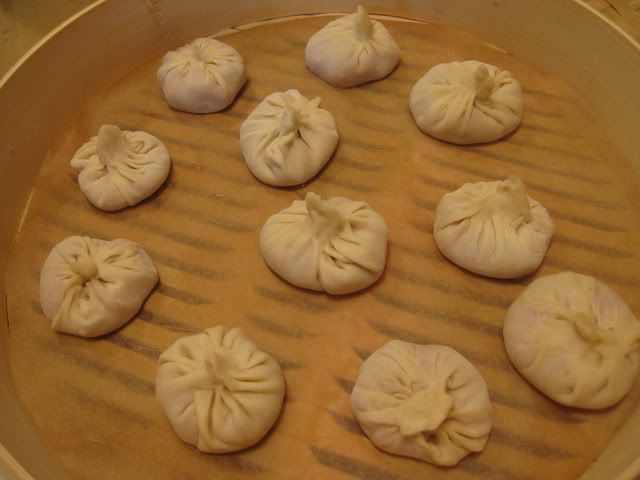
Ready to eat (after steaming on parchment in a bamboo steamer):
Some of these were a little fragile--I attribute this to not keeping the skin 'belly' thick enough. You can see one in the background I lifted previously causing the bottom to drop out. Some were a bit sturdier.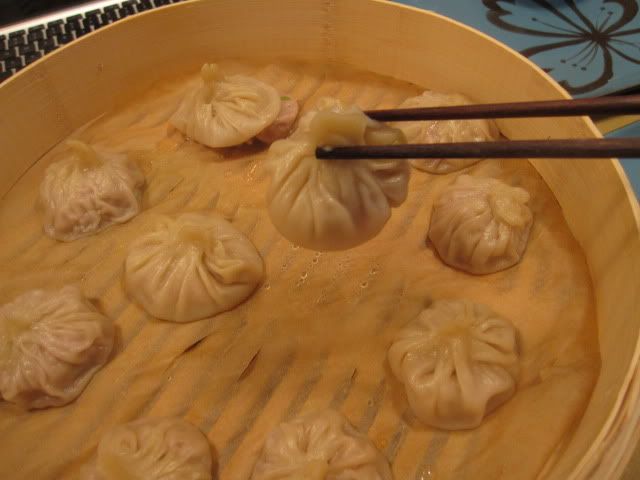
Served with Chinkiang vinegar and ginger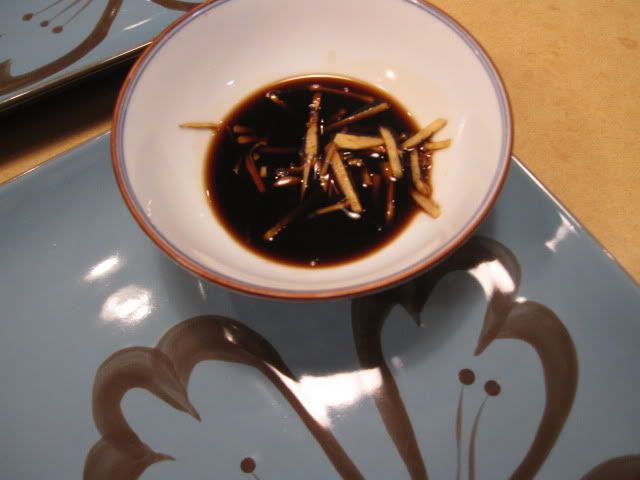
-
-
-
Post #13 - June 13th, 2010, 1:36 pmThose look amazing!
Did they taste as good as they look?
-
-
Post #14 - June 13th, 2010, 2:03 pmthaiobsessed wrote:The dough rests for an hour, then you divide it, flatten it with a tortilla press (hmm...I'm guessing that's not 'authentic') and roll it out with a wooden dowel.
Don't give it a moments thought, it is a bow to practicality. I bought a tortilla press after watching a bakery in Chinatown use one to make dumpling skins. I have yet to make a tortilla on it, though it has made many Chinese dumpling and Russian pelmeni skins.
This all looks fabulous. Thanks!
Regards,Cathy2
"You'll be remembered long after you're dead if you make good gravy, mashed potatoes and biscuits." -- Nathalie Dupree
Facebook, Twitter, Greater Midwest Foodways, Road Food 2012: Podcast
-
-
Post #15 - June 13th, 2010, 4:33 pmWow. Your pleats are incredible!
My tortilla press broke after an unfortunate [img=http://vimeo.com/10023071]gluten-related scientific experiment[/img]; I've been meaning to take another whack at food desert soup dumplings (I realized I could easily make a canned crab/canned shrimp filling: I found the bean soup just didn't work.) It will have to wait until I get to Maxwell St. again...
-
-
-
Post #16 - June 13th, 2010, 4:38 pmzoid wrote:Those look amazing!
Did they taste as good as they look?
Thanks!
So, I've only had XLB at a few places in New York (in order of preference: a place in Flushing I can't remember the name of, Joe's Shanghai in Midtown and Grand sichuan international) and at Phoenix. I thought they tasted better than Phoenix for sure (not saying much) and maybe Grand Sichuan (though it's been awhile--I love the restaurant but their XLB weren't so great). But they were pretty good. It was fun to just 'get my hands dirty' and work on pleating the dumplings. For my next batch, I will try adding some yeast dough to make them true 'baozi' (thanks Pigmon and trixie pea for the nice explanations). I'm trying to figure out what the yeast dough adds--elasticity? flavor? something intangible? I think making the aspic will be at least a few batches away (I want to get better at making the pleats before I try the aspic).Cathy2 wrote:I bought a tortilla press after watching a bakery in Chinatown use one to make dumpling skins.
That's kind of funny--I guess if they can do it in the bakery, I can do it in my home kitchen. It really does help get the skins more uniform. And at least I'm getting another function out of one of my numerous kitchen tools.Mhays wrote:I've been meaning to take another whack at food desert soup dumplings (I realized I could easily make a canned crab/canned shrimp filling: I found the bean soup just didn't work.)
You know, none of the ingredients are that hard to come by--sesame oil, chinkiang vinegar and rice wine would be the toughest for the food desert project.
-